
- No Products In The Cart
- start shopping
Black Seed Savvy: Why This Tiny Superfood Belongs in Your Kitchen
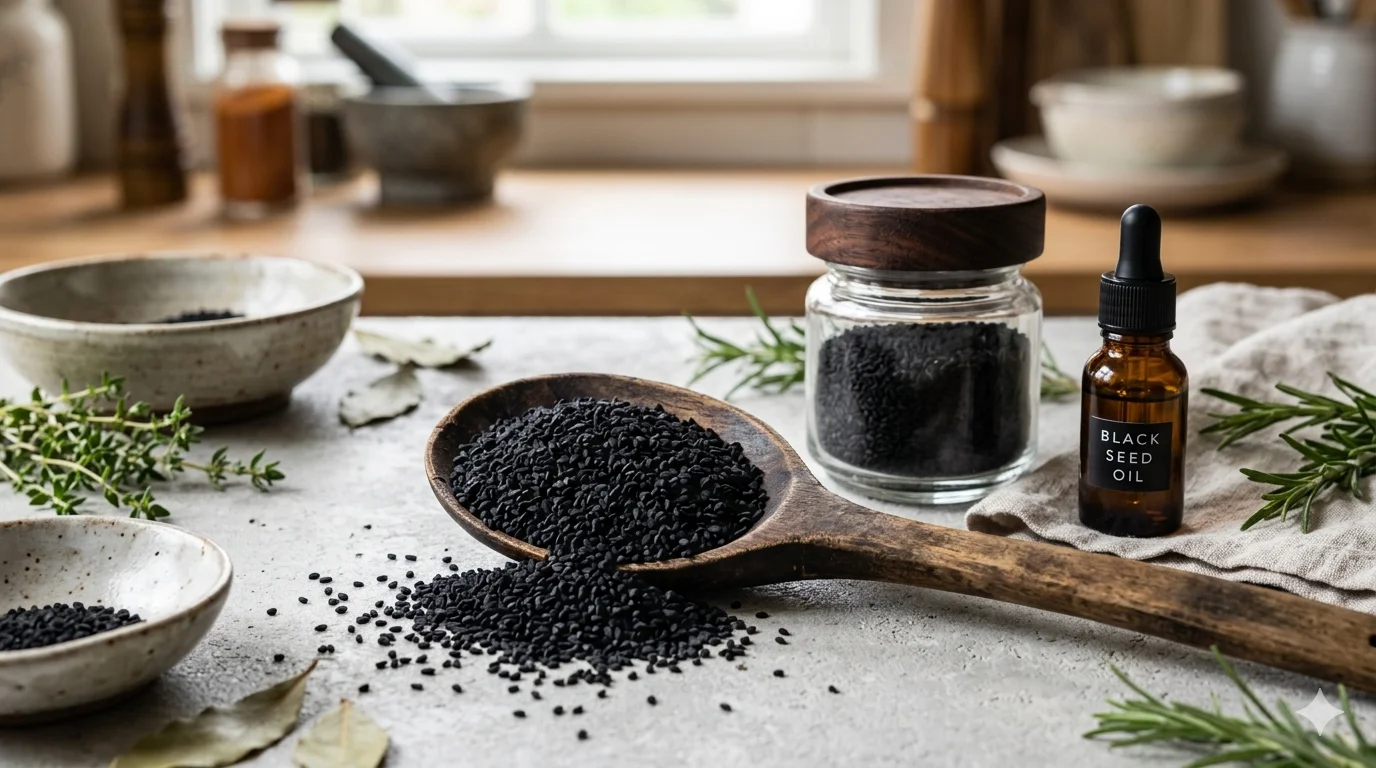
Black seed (Nigella sativa) is a nutrient-rich, traditional remedy containing the active compound thymoquinone, which provides antioxidant, anti-inflammatory, and antimicrobial properties. It is used to support immune function, reduce blood pressure, improve respiratory issues (asthma), and manage blood sugar.
Key Health Benefits of Black Seed
- Respiratory Health: Acts as a bronchodilator and antihistamine, aiding in the relief of asthma, bronchitis, and allergies.
- Metabolic Health & Weight Loss: Studies suggest it may help lower blood sugar (fasting blood sugar and HbA1c) and improve blood lipid profiles (cholesterol/triglycerides). It is also linked to modest reductions in BMI and waist circumference.
- Skin and Hair Improvement: Topical application of black seed oil can reduce acne due to antimicrobial effects, and it is used to soothe eczema and psoriasis.
- Immune System Support: High antioxidant levels, particularly from thymoquinone, help fight free radicals, reduce inflammation, and may protect against chronic illnesses.
- Blood Pressure Management: It has shown antihypertensive effects, contributing to heart health.
- Potential Neuroprotective Benefits: Some studies suggest it may protect brain cells against inflammation-related diseases like Alzheimer’s and Parkinson’s.
Common Forms & Usage
Black seeds are used whole or ground in food, while black seed oil is commonly taken orally or applied to the skin. Key tips for consumption include:
- Dosage: Studies have used 2,000 mg of black seed oil daily for weight loss and 2.5 mL daily to reduce blood lipid markers.
- Safety: While generally safe, it is advised to consult a healthcare professional before starting supplementation to avoid potential interactions with medication.
Common Concerns & Limitations
- Evidence Levels: While traditional use is extensive, many, but not all, uses are supported by strong human clinical trials.
- Side Effects: Potential for allergic skin reactions when applied topically (always patch test).
Top Usage Tips
- Forms: Available as whole seeds, ground powder, or concentrated oil (liquid/capsules).
- Dosage: Most studies use 1–2 grams of powder or 2.5–5 mL of oil daily for 8–12 weeks.
- Safety Note: Use caution if you are pregnant (it may cause uterine contractions) or taking medications for blood pressure, diabetes, or blood thinning.
Integrating black seeds into your daily routine is easy because they have a mild, nutty flavour with a slight peppery kick, similar to a mix of onion, black pepper, and oregano.
To get the most out of them, it is best to lightly toast the whole seeds to release their essential oils or use cold-pressed oil. Here are some simple ways to add them to your meals:
If you want to purchase Extra Virgin Ethiopian Black Seed Oil – 100ML so please click this link.
1. Simple Morning Rituals
- The Honey Mix: Mix 1 teaspoon of ground black seeds with 1 tablespoon of raw honey. This is a traditional “tonic” for energy and immunity.
- Morning Smoothie: Add ½ teaspoon of black seed oil or 1 teaspoon of ground seeds to your favorite fruit or green smoothie. The fruit flavors easily mask the slightly bitter aftertaste.
- Warm Lemon Water: Stir a few drops of black seed oil into warm lemon water to start your digestion for the day.
2. Breakfast & Breads
- Avocado Toast: Sprinkle whole or cracked black seeds over avocado toast for extra crunch and a savoury flavour.
- Yogurt or Oatmeal: Stir a teaspoon of seeds into your yogurt parfaits or warm oatmeal bowl.
- Homemade Baking: Press the seeds into the crust of homemade bread, muffins, or flatbreads (like Naan) before baking.
3. Savory Lunch & Dinner
- Salad Dressing: Whisk black seed oil into a vinaigrette with olive oil, lemon juice, and Dijon mustard.
- Roasted Veggies: Sprinkle the seeds over root vegetables (like carrots, sweet potatoes, or squash) before roasting.
- Soups & Stews: Use them as a garnish for lentil soup, curries, or stir-fries to add texture and a peppery finish.
4. Flavouring Proteins
- Meat Rub: Mix ground black seeds with cumin, coriander, and garlic powder to create a flavorful rub for chicken, lamb, or fish.
- Egg Dishes: They pair exceptionally well with eggs; try them sprinkled over fried eggs or folded into an omelet.
Quick Tip for Storage
Because the oils in black seeds can go rancid, store your black seed oil in a cool, dark place (the fridge is best) and keep whole seeds in an airtight container away from direct sunlight.
Summary:
This article explores the powerful health potential of black seeds (Nigella sativa), a traditional remedy celebrated for its high concentration of thymoquinone. It highlights how these tiny “seeds of blessing” offer science-backed support for immune function, metabolic health, and respiratory relief, while also serving as a versatile tool for skin care and weight management.
Beyond the clinical benefits, the guide provides practical advice for integrating black seeds into a daily diet. From simple morning tonics with honey to savoury culinary uses in breads, salads, and proteins, it demonstrates how easily this ancient superfood can be adapted for modern wellness routines.
Also Read: Ultimate UK Raw Honey Guide: Purity, Health, and 2026 Top Picks