- No Products In The Cart
- start shopping
How to Choose the Best Raw Honey UK: What the Label Won’t Tell You
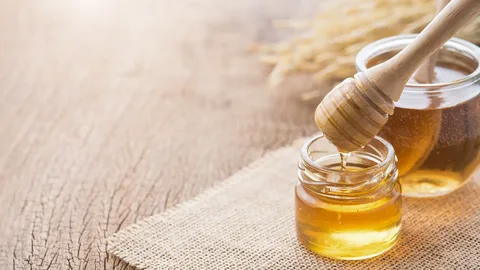
Raw honey is honey extracted from the hive and bottled without pasteurisation or fine filtration, so it keeps natural enzymes, pollen and antioxidants that heat-treated honey loses. Choosing the best UK raw honey means checking for a named single-origin location, natural crystallisation, minimal-processing label wording, and a price that reflects small-batch production rather than industrial blending.
What Is Raw Honey, and Is It Legally Defined in the UK?
Raw honey has no statutory legal definition in UK food labelling law — the term is an industry description, not a certified standard.
In practical terms, raw honey is honey taken from the hive and bottled without heating above approximately 35°C — hive temperature and without fine filtration. Because it skips both steps, the honey retains the natural compounds that the bees produced: enzymes, pollen grains, propolis traces, and antioxidants.
This “no legal definition” point is confirmed by four independent sources: Willow Park Honey, Northumberland Honey Co, Laverde Artisan, and delicious. magazine.
Honey composition and labelling in England is governed by The Honey (England) Regulations 2015 (SI 2015/1348). Those regulations set standards for what can be sold as honey — including composition, moisture limits, and labelling requirements. They do not define or protect the word “raw” as a label term. Any producer can print “raw” on a jar without meeting a legally defined standard.
What does that mean for you as a buyer?
It means you cannot rely on the word “raw” alone. You need to check several other signals on the label and in the jar — and this guide works through each one.
What is the difference between raw honey and ordinary honey?
Standard supermarket honey is usually pasteurised — heated to temperatures well above 35°C — and finely filtered to produce a clear, consistently runny product with a long shelf life. Pasteurisation makes industrial bottling faster and keeps the honey liquid on the shelf for longer.
The trade-off is that high heat degrades the natural compounds that make honey nutritionally distinct from plain sugar syrup: enzymes break down, delicate aromatic compounds evaporate, and pollen is removed by ultra-fine filtration. Raw honey skips both processes. The result is a cloudier, more variable product that may crystallise — but retains far more of what the bees originally produced.
How Can You Tell Raw Honey by Sight and Texture?
Genuine raw honey shows three physical signs that processed honey does not: cloudiness, visible suspended particles, and a natural tendency to crystallise over time. If a jar labelled “raw” is perfectly clear and has stayed liquid for well over a year at room temperature, treat that as a reason to look more carefully at the label.
Why does raw honey crystallise?
Crystallisation happens because raw honey contains a higher proportion of glucose relative to fructose than heavily processed honey. Glucose is less soluble in water than fructose and naturally forms crystals — a process that speeds up in cooler temperatures. The glucose-to-fructose balance depends on floral source: rapeseed honey, which is glucose-heavy, crystallises very quickly, sometimes within weeks of extraction, as noted by delicious. magazine.
Is crystallised honey still safe to eat?
Yes. Crystallisation is a sign of natural sugar chemistry, not spoilage. If your raw honey turns solid or grainy, place the jar in a bowl of warm (not boiling) water and it will gently return to a softer consistency. Never microwave it — sudden high heat will destroy the enzymes and antioxidants that make raw honey worth buying.
Four physical signs to check:
- Cloudiness — Genuine raw honey is not glass-clear. Fine pollen particles and wax traces remain suspended in the liquid, creating a hazy or milky appearance.
- Visible particles — Tiny suspended specks of pollen are normal and expected. Their presence confirms the honey has not been ultra-filtered.
- Thickening over time — A jar of raw honey stored at room temperature should begin to thicken or granulate within a few months of purchase, depending on its floral source.
- Texture under a spoon — Raw honey that has partially set has a slightly grainy, almost fudge-like texture when stirred. Smooth, uniform, glossy texture throughout a jar that claims to be “raw” is a prompt to check the label more carefully.
A beekeeper handling raw honey directly will notice that freshly extracted honey from an unheated batch often has a thin layer of micro-bubbles at the surface — a result of natural fermentation gases and air trapped during extraction. This surface foam disappears in processed honey because heating and filtration remove it. Its presence in a jar is a subtle but consistent sign of minimal handling.
How Do You Read a Raw Honey Label Correctly?
Check the origin statement first — if it reads “blend of EU and/or non-EU honeys,” the honey is sourced from multiple countries and offers no meaningful traceability, regardless of any other claim on the jar.
Several common label phrases are more reassuring than they should be, and understanding each one takes less than 30 seconds.
What is the difference between “raw” and “pure” honey on a UK label?
“Pure honey” means no ingredients other than honey were added — no added sugar, no syrup, no flavouring. But a pure honey can still be blended from multiple countries, heated to high temperatures, and finely filtered until it is clear. The word “pure” says nothing about processing method. “Raw honey” specifically claims minimal heating and minimal filtration. The two terms are not interchangeable, as confirmed by delicious. magazine’s label glossary .
Label term reference table:
| Label Term | What It Actually Means | Reassurance or Red Flag |
| Blend of EU and/or non-EU honeys | Sourced from multiple countries, blended industrially, often heated for uniformity | Red flag — very low traceability |
| Product of UK / Product of England | Single-country origin, more traceable than a blend | Reassurance |
| Cold-extracted | Honey removed from the comb without heating above hive temperature | Reassurance |
| Unfiltered / coarse filtered | Pollen and wax traces kept in the jar | Reassurance |
| Pure and natural | No additives, but may still be blended, heated, and finely filtered | Neutral — check other label details |
| Single apiary / single origin | Traceable to one set of hives in one named location | Reassurance |
| Monofloral | Predominantly from one nectar source (e.g. heather, acacia) | Neutral — quality depends on producer practices |
| Set or creamed | Created by controlled crystallisation or churning — texture is managed, not a processing defect | Neutral — check for raw/unfiltered claim alongside |
| Raw | Claimed minimal heat and minimal filtration — not a legally protected term in the UK | Reassurance only when supported by other label signals |
Is UK honey organic?
No UK honey can be fully certified organic. Bees forage freely up to roughly 5 miles from the hive, and no UK location can guarantee exclusively organic-certified land within that entire radius — a point confirmed by both Northumberland Honey Co and Ossa Organic. Some UK producers follow organic management principles in their own hive practices, which is worth asking about directly.
What should the label tell you about where the honey came from?
A trustworthy raw honey label names a specific location: a county, a region, a farm name, or a named town. “Essex wildflower honey” or “Northumberland heather honey” gives you something checkable. “A blend of non-EU honeys, packed in the UK” tells you nothing useful about quality, freshness, or processing method — and is one of the most common labels on supermarket shelves.
If the label cannot tell you where the bees foraged, the producer has no meaningful provenance to offer.
Should You Choose British Honey or Imported Varieties Like Manuka?
British raw honey is the stronger choice for most everyday buyers — it offers traceable local provenance, seasonal character, and lower price than imported premium varieties, without any proven nutritional disadvantage.
Manuka honey is not proven to be nutritionally superior to other raw honeys when eaten. Manuka commands a premium price because it carries a measurable level of methylglyoxal (MGO), rated through the Unique Manuka Factor (UMF) system, and because decades of marketing have positioned it as a “superfood.” delicious. magazine states directly that “there’s no conclusive evidence that eating manuka is particularly beneficial”. The UMF rating does not justify a price several times higher than a genuinely raw British alternative for everyday eating.
How much British honey is consumed in the UK?
Only around 14 per cent of the honey consumed in the UK is British, according to delicious. magazine. The rest is imported, primarily from China and other countries, with no requirement to declare individual countries of origin for blended products.
What are the main types of UK raw honey?
British honey varies significantly by floral source and region. The four types you are most likely to encounter are:
- Wildflower honey: Multifloral, produced from whatever mix of seasonal flowers the bees could reach. Flavour and colour shift between spring and summer batches from the same hive. Generally lighter in spring, richer and more complex in summer.
- Heather honey: Monofloral, sourced from moorland heather — common in Scotland, parts of Yorkshire, and other upland areas. Noticeably thicker than wildflower varieties, with a strong, slightly smoky flavour. Darker honeys, including heather, tend to contain higher antioxidant levels, as noted by Ossa Organic .
- Blossom honey: Produced from orchard and hedgerow blossoms. Generally milder and lighter in colour than wildflower varieties.
- Single-origin local honey: Small-batch honey from one named apiary, traceable to a specific location. The most provenance-transparent option available to UK buyers.
The seasonal shift in flavour between a spring batch and a late-summer batch from the same hive is one of the clearest signals that a honey is genuinely single-origin. A jar described as “summer wildflower” that tastes identical to last year’s spring batch from the same producer is worth questioning.
How Can You Test Raw Honey for Purity at Home?
Check whether the honey crystallises within two to three months of purchase at room temperature — this is the single most accessible home test for genuine minimal processing, and it requires no equipment.
Honey adulteration is a documented and current problem in the UK market. In 2023, the European Commission tested honey samples across 20 countries. Nearly half were suspected of adulteration with sugar syrup. All 10 UK-packed samples in that group were among the suspected adulterated products, as reported by delicious. magazine.
Three home checks to apply:
- Watch for crystallisation over time. Genuine raw honey — particularly British wildflower or heather varieties — will typically begin to thicken, cloud, or granulate within two to three months at room temperature. Raw honey adulterated with glucose or sugar syrup resists crystallisation. It will often remain perfectly clear and runny for a year or more.
- Check the label for a named origin and harvest date. A genuine small-batch raw honey names the region it came from and, ideally, the harvest season or year. Vague labelling (“blend of EU and non-EU honeys,” no location, no date) correlates with the higher-fraud-risk end of the honey market.
- Compare the price against what genuine small-batch production costs. Raw honey produced by a single beekeeper from named hives in a specific UK location has real production costs: limited harvest volume, manual extraction, individual jar filling. A jar priced at supermarket-squeeze-bottle levels and labelled “raw” with no origin detail deserves closer scrutiny than one priced to reflect the cost of genuine small-batch work.
Some specialist raw honey retailers publish independently tested results for moisture content and freshness indicators — if you are buying from a supplier directly, it is reasonable to ask whether they have this data available. High moisture content in honey indicates either dilution or premature harvesting before the bees have fully ripened the nectar, both of which affect quality and shelf stability.
What Nutrients Does Raw Honey Retain That Processed Honey Loses?
Raw honey retains four categories of natural compounds that pasteurisation and fine filtration remove or degrade: enzymes, pollen, propolis, and antioxidant compounds. Processed supermarket honey loses some or all of these during heat treatment and ultra-filtration.
Enzymes are proteins produced by the bees during nectar processing in the hive. They are heat-sensitive — temperatures significantly above 35°C begin to degrade them. Their presence in raw honey is one reason raw honey behaves differently from refined sugar in the body, though raw honey is still primarily a sugar product and should be consumed in moderation.
Pollen is the fine powder that sticks to bees during foraging. It passes into raw honey during extraction and is removed by ultra-fine filtration in commercial processing. Its presence in raw honey is what causes the natural cloudiness described in Section 2, and it is also what makes raw honey geographically traceable — pollen grains are species-specific and can identify what plants the bees visited.
Propolis is a resinous compound bees collect from tree bark and buds and use to seal the hive. Small traces pass into raw honey during extraction. It is present in genuinely unfiltered honey and absent or negligible in ultra-filtered commercial honey.
Antioxidant compounds — specifically flavonoids and phenolic compounds — are found in varying concentrations depending on floral source. Ossa Organic notes that darker honey varieties, such as heather honey, tend to contain higher antioxidant levels than lighter varieties. Darker colour in raw honey generally indicates a richer polyphenol content, though this varies by region and season.
Some retailers describe honey using a “Total Activity” (TA) antimicrobial rating, on a scale loosely described as running from 1 to 20, as mentioned by Sous Chef. This measure is less standardised and less independently verified than the UMF and MGO systems used specifically for Manuka honey. Treat TA ratings as indicative rather than comparable across different producers.
Raw honey is a minimally processed food. It is not a medicine, and none of the above compounds should be interpreted as a clinical treatment for any condition. The nutritional value it retains is real but modest — the reason to choose raw honey over processed honey is quality of food, not replacement of medical care.
How Much Should Genuine Raw Honey Cost in the UK?
Genuine small-batch raw honey costs measurably more than supermarket blended honey — a 340g jar from a named single-origin UK apiary typically sits in a higher price bracket than an equivalently sized supermarket blended jar, reflecting the difference in harvest volume, extraction method, and traceability rather than branding alone.
Why does small-batch raw honey cost more?
A small-batch beekeeper harvests only the surplus honey — the amount beyond what the bees need to survive the winter. This limits total yield per hive, per season. The honey is extracted manually or with small-scale equipment, filled into individual jars, and labelled with traceable origin information.
Willow Park Honey explains this directly: small-batch producers “don’t over-harvest” and ensure “the bees have enough of their own honey to get through the winter” — a constraint that limits volume and therefore raises cost per jar.
What does price signal about quality?
A jar priced at the same level as a mass-market product — with no named origin, no harvest date, and a “raw” claim — is the combination most associated with the higher-fraud-risk end of the honey market, as the EC 2023 adulteration data demonstrates.
When comparing jars at different price points, cross-reference price against label transparency: a higher-priced jar that names a specific county, apiary, beekeeper, and harvest year is demonstrating the provenance that justifies the premium. A higher-priced jar with vague labelling is not.
Buyers who regularly purchase from farmers’ markets or direct from UK apiaries notice that the same beekeeper’s summer wildflower batch frequently differs in colour and texture from the spring batch — a variation that only occurs in genuinely single-origin, unhomogenised honey. That natural inconsistency, rather than being a flaw, is one of the most reliable buying signals that the honey is genuinely what the label claims.
What Mistakes Should You Avoid When Buying Raw Honey?
The most consequential mistake is assuming “pure” means “raw” — two legally distinct claims that most supermarket shoppers treat as equivalent, and that the honey industry relies on buyers not distinguishing.
The other four mistakes are:
- Refrigerating raw honey to preserve it. Refrigeration does not extend the shelf life of honey and actively speeds up crystallisation. Raw honey stored in a cool, dark kitchen cupboard in a sealed glass jar is correctly stored. Both Willow Park Hone and Ossa Organic confirm this.
- Giving raw honey to infants under 12 months. Raw honey — and any honey — must never be given to babies under 12 months old. Honey can contain trace botulinum spores. An adult digestive system handles these safely, but an infant’s gut cannot yet neutralise them effectively, as confirmed by Laverde Artisan and Ossa Organic. After 12 months, honey is safe for everyday consumption.
- Accepting the local honey hay fever claim without scrutiny. The idea that eating local raw honey helps desensitise hay fever sufferers to local pollen is widely repeated — including by Ruxstons — but it is anecdotal, not clinically confirmed. No peer-reviewed evidence establishing this as a reliable treatment is cited by any competitor source reviewed for this guide. If you have seasonal allergies, speak to a GP rather than relying on honey as a substitute for medical advice.
- Buying on low price alone without checking the label. The EC 2023 adulteration data — all 10 UK-packed samples tested were suspected of adulteration — shows that cheap, vaguely labelled honey carries a higher fraud risk. A raw honey with no named origin, no harvest date, and a supermarket-level price deserves the same scepticism you would apply to any other premium food claim at a budget price point.
Frequently Asked Questions:
Why does raw honey crystallise?
Raw honey crystallises because it contains a naturally higher proportion of glucose relative to fructose than processed honey. Glucose is less soluble in water and forms crystals over time, especially in cooler temperatures. Crystallisation is a sign of minimal processing, not spoilage — gently warming the jar in warm water restores it.
Is raw honey safe for babies?
No. Honey of any kind — including raw honey — must never be given to infants under 12 months old. It can contain trace botulinum spores that an adult digestive system handles safely but an infant's gut cannot yet process. After 12 months, honey is safe for everyday consumption.
Is UK raw honey organic?
No UK honey can achieve full organic certification. Bees forage freely up to roughly 5 miles from the hive, and no UK location can guarantee exclusively organic-certified land within that entire radius. Some UK producers use organic hive-management methods, but this is not the same as certified organic status.
Does local raw honey help with hay fever?
This claim is anecdotal and not clinically confirmed. The idea is that local pollen in raw honey gradually desensitises the immune system. No reliable clinical evidence supports this as an effective hay fever treatment. If you have seasonal allergies, consult a GP rather than relying on honey.
How should I store raw honey?
Store raw honey in a sealed glass jar at room temperature, away from direct sunlight. Avoid refrigeration, which speeds up crystallisation. Avoid microwaving, which destroys enzymes. If the honey has solidified, place the jar in a bowl of warm (not boiling) water until it softens to your preferred consistency.