- No Products In The Cart
- start shopping
Why Raw Honey Is Better How Many Processing Removes and Why It Matters
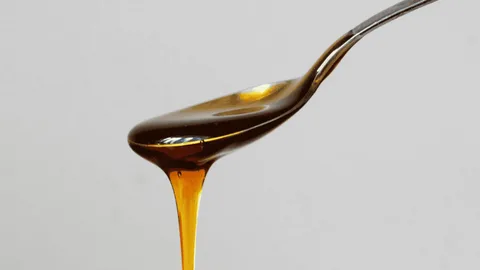
Raw honey is better than regular commercial honey because it is unheated and minimally filtered, retaining active enzymes including glucose oxidase, bee pollen, flavonoids, and trace minerals. Commercial honey is heated to 63–77°C during pasteurisation, destroying the compounds that give raw organic honey its antibacterial, antioxidant, and prebiotic properties.
What Is the Difference Between Raw Honey and Regular Honey?
Raw honey is extracted from the comb, strained to remove wax and debris, then jarred without any heat applied. Regular commercial honey undergoes two additional stages — pasteurisation and filtration — that fundamentally alter its compound profile.
What is raw honey?
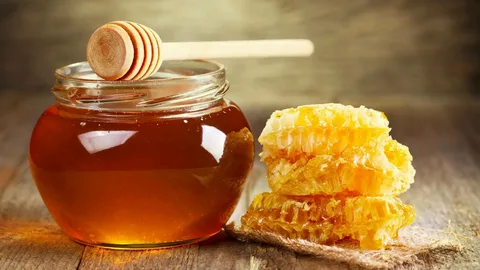
Raw honey comes straight from the honeycomb with no heat applied and no fine filtration. After extraction, a beekeeper strains the honey through a coarse mesh to remove large debris such as wax cappings and bee parts. Pollen grains, enzymes, and all bioactive compounds remain intact. Inside a healthy hive, bees maintain a temperature of approximately 35°C — the maximum temperature raw honey ever experiences before it reaches the jar 1.
Because no heat is applied, raw honey keeps its naturally cloudy appearance, its thick texture, and its tendency to crystallise over time. These are not flaws — they are the physical evidence of an unprocessed product.
What is regular honey?
Regular honey — the kind sold in most UK supermarkets — is pasteurised and filtered before bottling. Pasteurisation heats honey to between 63°C and 77°C 1. This kills wild yeast, prevents fermentation, improves clarity, and extends shelf life.
After heating, the honey passes through fine filters or ultrafine membranes that remove pollen grains and remaining particles. The result is a clear, smooth, uniform product — but one that has lost a significant portion of its original compound profile.
How do they differ?
| Attribute | Raw Honey | Regular / Commercial Honey |
| Processing method | Extracted and coarse-strained only | Pasteurised (63–77°C) and filtered |
| Maximum temperature experienced | ~35°C (hive temperature) | 63–77°C during pasteurisation |
| Enzyme activity | Active — diastase, invertase, and glucose oxidase retained | Significantly reduced or destroyed |
| Bee pollen | Present | Removed by commercial filtration |
| Antioxidants (flavonoids, phenolic acids) | Retained | Reduced by sustained heat exposure |
| Appearance | Cloudy, thick, crystallises naturally | Clear, smooth, remains liquid for longer |
| HMF content | Near-zero in fresh raw honey (typically under 5mg/kg) | Elevated by heat processing |
| Yeast | Natural wild yeast present | Killed by pasteurisation |
Why Does Pasteurisation Destroy Honey’s Active Compounds?
Pasteurisation destroys honey’s active compounds through two distinct mechanisms: heat denatures the protein-based enzymes, and fine filtration physically removes pollen grains. These are separate processes with separate consequences — and understanding both explains exactly why raw honey retains properties that commercial honey loses.
How heat destroys honey’s enzymes
Enzymes are proteins, and proteins lose their functional shape — a process called denaturation — when exposed to sustained heat above their stability threshold. Raw honey’s key thermolabile enzymes begin to lose activity at 45–50°C 2. Commercial pasteurisation operates at 63–77°C 1 — well above that threshold, and held there for an extended period.
Bees maintain the hive at approximately 35°C. The temperature gap between a raw honey environment and a commercial pasteurisation vessel is 28–42°C.
That difference is the reason raw honey’s enzymes remain active while commercial honey’s are largely destroyed before the jar is sealed.
The three active enzymes raw honey retains — and what each one does
Raw honey contains three primary enzymes. Each has a distinct function. Each is degraded by the heat levels used in commercial honey processing.
| Enzyme | Function in Raw Honey | What Pasteurisation Does |
| Glucose oxidase | Produces hydrogen peroxide (H₂O₂) — raw honey’s natural antibacterial agent | Activity significantly reduced above 45°C; largely destroyed at commercial pasteurisation temperatures 1 |
| Diastase (amylase) | Breaks down complex starches; serves as the official international quality marker for honey freshness, expressed as the Diastase Number (DN); minimum DN of 8 Schade units required under the 3 | Begins to degrade above 40°C; activity drops approximately 50% at 60°C within 30 minutes; samples below DN 8 indicate heat damage 4 |
| Invertase | Converts sucrose from flower nectar into fructose and glucose during honey ripening | Among the most heat-sensitive honey enzymes; begins to lose activity above 35–40°C 4 |
A food grader testing honey uses the Diastase Number as the practical field indicator of heat damage. When a commercial sample returns a DN below the regulatory minimum of 8 Schade units — as set by the 3 — the conclusion is unambiguous: the honey has been overheated during processing.
How filtration strips out bee pollen
Filtration is an entirely separate mechanism from pasteurisation. Where heat destroys compounds chemically, filtration removes them physically.
Raw honey is strained through a coarse mesh. This removes large debris — wax fragments, bee parts — but leaves pollen grains intact. Commercial honey passes through much finer filtration systems. Ultrafiltration, used by large-scale producers, removes pollen grains and other fine particles entirely to produce a consistently clear product.
Bee pollen is not merely a visual element of raw honey. It is the vehicle for many of honey’s antioxidant and anti-inflammatory compounds. A 2015 review study cited by 5 confirmed that bee pollen carries antioxidant properties, anti-inflammatory effects, antibacterial and antifungal action, and pain-relieving properties. Every filtration stage that removes pollen removes these properties alongside it.
HMF — the chemical marker that proves your honey has been heated
Hydroxymethylfurfural (HMF) is a chemical compound formed via the Maillard reaction — a heat-induced process in which fructose degrades under heat and acidic conditions. Fresh raw honey contains near-zero HMF — typically under 5mg/kg 6. Heat processing elevates HMF levels measurably and progressively.
The 3 set a legal maximum of 40mg/kg HMF for honey sold in England. Honey that exceeds this limit has been overheated and fails UK quality standards. A low HMF reading is a measurable chemical confirmation that the honey in the jar has experienced minimal heat. Raw honey, by definition, tests close to zero.
What Are the Health Benefits of Raw Honey’s Retained Compounds?
Raw honey contains active antioxidants — flavonoids and phenolic acids
Raw honey’s antioxidants fall into two named compound classes: flavonoids and phenolic acids. These phytonutrients are responsible for a major share of raw honey’s antioxidant activity. Both neutralise free radicals — unstable atoms that cause oxidative stress and are associated with chronic diseases including cancer and cardiovascular disease.
A 2023 review of studies cited by 7 found raw honey may have potential protective effects on the respiratory, gastrointestinal, cardiovascular, and nervous systems.
No large, controlled studies have yet directly measured the precise percentage reduction of flavonoids and phenolic acids caused specifically by UK commercial pasteurisation. The directional evidence — that heat reduces polyphenol levels in foods generally — is consistent across food science literature. The magnitude of that reduction in honey specifically requires further controlled research to quantify precisely.
Raw honey contains bee pollen — an anti-inflammatory and immune-active compound
Commercial pasteurisation and fine filtration remove bee pollen from regular honey. Raw honey retains it. The 2015 review study cited by 5 found that bee pollen has antioxidant properties, anti-inflammatory effects, antibacterial and antifungal action, and pain-relieving properties. Bee pollen also contains amino acids, vitamins A and C, and trace amounts of calcium, magnesium, and sodium.
Bee pollen’s retention in raw honey means the anti-inflammatory and immune-active properties associated with pollen are present in every spoonful. Commercial honey, filtered to remove all pollen, cannot deliver them.
Raw honey contains bee propolis — with antifungal and antibacterial properties
Bee propolis is the waxy resin bees use to seal gaps in the hive and protect it from infection. Raw honey retains trace amounts of propolis. A 2017 review study cited by 5 found that bee propolis may have anti-inflammatory effects, anti-cancer and antiulcer action, and antifungal properties. Propolis also contains B vitamins, vitamins C and E, magnesium, and potassium.
Is raw honey good for digestion and gut health?
Raw honey supports gut health primarily through its prebiotic function. Prebiotics are compounds that feed beneficial bacteria already living in the gut — and raw honey contains them. Research cited by 7 suggests oregano honey in particular may have potential as a treatment for Helicobacter pylori bacteria, a common cause of stomach ulcers.
The evidence for using honey as a direct treatment for digestive complaints is limited. The prebiotic function — supporting the gut microbiome rather than treating a specific condition — is the better-supported claim.
Can raw honey help with a sore throat or cough?
Raw honey can help relieve sore throat and cough symptoms, including nocturnal cough. A 2021 review of studies cited by 7 suggested honey could be superior to other forms of care for improving upper respiratory tract infections.
The British Heart Foundation notes that part of the soothing effect of honey in a hot drink may come from the warmth of the liquid and the act of hydrating, not solely from the honey itself 8. Both mechanisms are likely active — the antibacterial and anti-inflammatory properties of raw honey combine with the physical soothing effect of a warm drink.
Is Raw Honey Safe? What You Need to Know Before You Buy
Raw honey is safe for most healthy adults and children over 12 months old.
Raw honey and infants: the one absolute safety rule
Raw honey must not be given to children under 12 months old. The NHS states that children should not have honey until they are over 1 year old 9. The NHS also states that honey can contain bacteria that produce toxins in a baby’s intestines and cause infant botulism 9.
The NHS botulism guidance page also advises that babies younger than 12 months old should not be given honey 10.
Both raw and pasteurised honey can carry spores of Clostridium botulinum. In adults and children over 12 months, the digestive system neutralises these spores without harm. In infants, the gut defences are not yet mature enough — if spores germinate in a baby’s intestine, they can produce a toxin that affects the nerves and muscles.
This rule applies to all honey varieties without exception. Pasteurisation kills bacteria but does not destroy the heat-resistant spores of Clostridium botulinum.
Who else should take care with raw honey?
Adults with severe pollen allergies should speak to their GP or allergy specialist before consuming raw honey regularly. Raw honey retains bee pollen that commercial honey has had removed.
People with compromised or weakened immune systems should seek medical advice before consuming unpasteurised food products, including raw honey.
Raw honey is also a high-sugar food. The NHS recommends that adults consume no more than 30g of free sugars per day 8. Honey counts as a free sugar. Consuming raw honey in moderation — a teaspoon or two per day — allows the active compounds to be present in the diet without significantly contributing to excess sugar intake.
What Does “Raw” Actually Mean on a UK Honey Label?
“Raw” on a UK honey label is a marketing descriptor, not a legally protected term. Understanding what it does and does not guarantee is essential for any UK buyer.
Is “raw” a legally protected term in the UK?
No — “raw” has no legal definition in the UK. The 3 govern honey composition, minimum quality standards, and labelling requirements in England. They specify that honey must have a minimum diastase activity of not less than 8 Schade units and a maximum HMF content of 40mg/kg. The Regulations do not, however, define the term “raw.”
Any producer can print “raw” on a UK honey label without meeting any specific, legally verified processing standard. The word signals an intention — minimal processing — but it does not carry a guarantee the way a legal quality standard would.
This also means that verifying whether a honey labelled “raw” is genuinely unheated requires looking beyond the label itself.
UK honey label terms — what they mean and what they don’t
| Label Term | What It Guarantees | Does It Mean Raw? |
| Raw honey | Minimal processing (producer’s claim — unregulated in UK) | Claimed, but not legally verified |
| Pure honey | No added ingredients (corn syrup, sugar, flavourings) | ❌ No — may be fully pasteurised |
| 100% honey | No added ingredients | ❌ No — does not indicate processing method |
| Organic honey | Farming method certified; no prohibited pesticides | ❌ No — may be pasteurised |
| Natural honey | No legal definition in UK | ❌ No — marketing term only |
| British honey | Country of origin: UK bees and UK harvest | ❌ No — may be pasteurised |
“100% honey” is the label most commonly mistaken for raw in UK supermarkets. It means only that the jar contains nothing but honey — no additives, no sweeteners. The honey inside is almost certainly pasteurised and filtered. It is not raw.
How to verify raw honey without relying on the label alone
Two reliable verification routes exist for UK buyers, beyond the label claim:
- Diastase Number (DN): The DN is the standard measure of enzyme activity in honey. The 3 require a minimum DN of 8 Schade units. Quality artisan producers often display DN on the label or provide lab test results on request. A DN significantly above 8 indicates strong enzyme activity and supports the claim of minimal heat processing.
- Source traceability: The British Beekeepers Association (BBKA) provides a 11 tool that allows UK buyers to locate BBKA-member beekeepers by postcode. Honey purchased directly from a BBKA-member beekeeper can typically be traced to the specific apiary, the extraction date, and the method used. No supermarket label can offer this level of traceability.
How to Tell Whether Honey Is Truly Raw
The clearest signs of raw honey are cloudiness, natural crystallisation, thick texture, and a complex floral aroma. In a water test, raw honey sinks rather than dissolving immediately.
A beekeeper extracting honey in a UK barn in autumn handles the honey at ambient room temperature — often well below 20°C — and jars it without heating. The honey that enters that jar looks, smells, and behaves very differently from a commercially pasteurised product.
Visual and physical signs of authentic raw honey
- Appearance: Raw honey is cloudy or opaque, not clear. The cloudiness comes from retained pollen grains, microscopic wax particles, and natural air bubbles — all removed during commercial filtration. Honey that is completely clear and uniformly translucent has been filtered.
- Crystallisation: Raw honey crystallises naturally, particularly in the cooler temperatures typical of a UK home. Crystallisation is the natural separation of glucose into crystal structures — accelerated in raw honey by the presence of pollen particles, which act as nucleation sites. It is not spoilage.
- Texture: Raw honey is notably thick and viscous at room temperature. Commercial honey is thinned by the heating process.
- Aroma: Genuine raw honey has a complex, floral scent that reflects its botanical source. UK wildflower honey, heather honey, and borage honey each carry a distinctly different aroma. Commercial honey has a milder, more uniform scent because blending and processing erase botanical variation.
- Water test: Drop a spoonful of honey into a glass of still water. Raw honey sinks and holds its form at the bottom of the glass. Adulterated or heavily diluted honey dissolves quickly and clouds the water.
Why crystallisation is a quality positive — not a problem
Crystallisation is physical evidence of two things that matter: the honey contains natural glucose at levels typical of an unprocessed product, and it retains the pollen particles that accelerate crystal formation.
Heavily processed commercial honey resists crystallisation because pasteurisation and ultrafiltration have altered the glucose-fructose balance and removed the pollen particles that would otherwise trigger crystal formation. A honey that never crystallises has almost certainly been heated and filtered to prevent it.
Is Raw Honey Worth the Extra Cost?
Yes — for buyers who want honey’s active compounds, raw honey is worth the price premium. Commercial honey has a longer liquid shelf life and does not crystallise, making it convenient and cheaper per jar. For occasional use purely as a sweetener, commercial honey is not harmful — it simply does not deliver the active enzyme activity, bee pollen content, or flavonoid profile that raw honey retains.
For most healthy adults who consume honey occasionally, the choice between raw and commercial honey is a quality preference, not a medical necessity. The case for raw honey rests on what it retains — not on extravagant claims for what it cures.
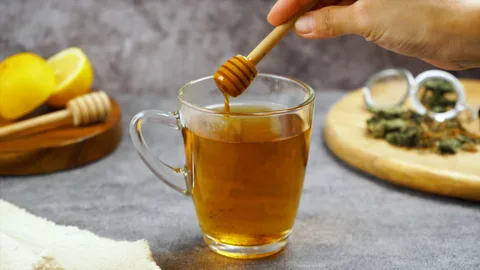
Adding raw honey to boiling water or cooked dishes destroys its active enzymes — the same heat that degrades honey during commercial pasteurisation applies equally in the kitchen. Add raw honey to drinks that have cooled to below 40°C to preserve its enzyme content.
Frequently Asked Questions:
Is 100% honey the same as raw honey?
No. "100% honey" means the product contains no added ingredients such as corn syrup or sweeteners. It does not indicate how the honey was processed. Most 100% honey sold in UK supermarkets is fully pasteurised and filtered. It is not raw, and it does not retain the active enzyme or bee pollen content of raw honey.
What are the main health benefits of eating raw honey?
Raw honey provides antioxidants (flavonoids and phenolic acids), active enzymes including glucose oxidase which produces natural hydrogen peroxide with antibacterial properties, bee pollen with anti-inflammatory and immune-active properties, and prebiotic compounds that support beneficial gut bacteria. These are present only because the honey has not been commercially heat-processed.
Does "raw" on a UK honey label have a legal meaning?
No. The Honey (England) Regulations 2015 do not define the term "raw." It is an unregulated marketing descriptor in the UK. To verify raw status independently, look for a stated Diastase Number (DN) on the label, or buy directly from a BBKA-member beekeeper who can confirm their extraction method.
Can I give raw honey to my baby or toddler?
Raw honey must not be given to children under 12 months old. The NHS advises avoiding all honey until a child is over one year old, due to the risk of infant botulism from Clostridium botulinum spores. Raw honey is safe for healthy children aged 12 months and over.
Does adding raw honey to hot drinks destroy its benefits?
Yes. Adding raw honey to boiling water or very hot tea destroys its active enzymes. Diastase begins to degrade above 40°C, and glucose oxidase loses activity above 45°C. To preserve the enzyme and antioxidant content, add raw honey to drinks that have cooled to below 40°C — warm enough to dissolve, cool enough to protect its active compounds.