- No Products In The Cart
- start shopping
Raw Honey Skincare: Benefits, Safe Use and Choosing the Right Type
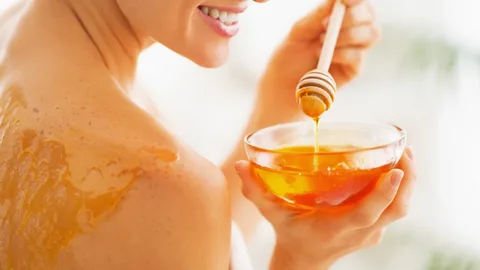
Raw honey — unheated, unfiltered and unpasteurised — acts as a natural humectant, antimicrobial agent and anti-inflammatory ingredient when applied directly to skin. Raw honey draws moisture into the skin, reduces acne-associated bacteria and supports gentle exfoliation via natural enzymes. Manuka honey provides stronger antibacterial action. Always perform a patch test before first use.
What Is Raw Honey and Why Does It Work Differently on Skin Than Regular Honey?
Raw honey is honey that has not been heated or filtered and still contains natural enzymes, antioxidants and live bacteria. Unlike processed honey, raw honey retains glucose oxidase, which can release low levels of hydrogen peroxide after dilution. This enzyme contributes to topical antibacterial activity on intact skin.
When raw honey contacts skin moisture, glucose oxidase converts glucose into gluconic acid and releases low, sustained levels of hydrogen peroxide. This mechanism contributes to the antibacterial function of diluted honey.
There is a second distinction worth making. Honey listed in a formulated skincare product — a cream, serum or cleanser — is present at a concentration of 1–10% in most cosmetic products. Higher concentrations are possible when honey is blended with oils, gels or emulsifiers. Raw honey applied directly from the jar delivers the ingredient undiluted.
What Does Raw Honey Actually Do for Skin? (The Mechanisms, Not Just the Claims)
Raw honey acts on skin as a humectant, antibacterial agent, anti-inflammatory, gentle exfoliant and antioxidant — five mechanisms, each operating differently. The table below states each benefit alongside its mechanism and the current weight of evidence.
| Benefit | Mechanism | Evidence level |
| Moisturisation | Humectant action: draws atmospheric moisture into the stratum corneum and reduces trans-epidermal water loss (TEWL) | Established cosmetic function |
| Antibacterial / anti-acne | Glucose oxidase releases low-level hydrogen peroxide after honey is diluted | Supported by laboratory evidence |
| Anti-inflammatory | Flavonoids may affect pro-inflammatory markers | Supported mainly by laboratory evidence; human data is limited |
| Gentle exfoliation | Natural enzymes help loosen dead surface cells, revealing brighter skin | Established cosmetic function |
| Antioxidant protection | Antioxidants neutralise free radicals | Supported by laboratory evidence; long-term human data is limited |
Fresh honey usually has a pH between 3.2 and 4.5. A dermatology review places the skin’s lipid barrier between pH 4 and 6. These ranges overlap between pH 4.0 and 4.5, but pH alone does not prove that raw honey preserves barrier function.
Phytochemicals are present in honey and may contribute to its anti-inflammatory and antioxidant effects. Many studies examining these compounds have been conducted in vitro or on mice. The extent to which these effects transfer to human skin remains unclear.
One benefit is frequently overstated and deserves a direct correction. Research has not established that raw honey lightens dark spots or reduces hyperpigmentation directly. Any brightening effect comes from removing dull, dead skin cells — not from changing skin pigment.
The anti-inflammatory effect is also subject to an evidence caveat: the relevant human evidence comes largely from studies on Manuka honey in clinical settings, not general raw honey in cosmetic use. The antioxidant claim is well-supported in laboratory conditions but has limited long-term human skin data. State both expectations clearly before committing to a raw honey routine.
Which Skin Types Can Use Raw Honey, and Who Should Avoid It?
Dry, sensitive and acne-prone skin can try raw honey on intact skin; people with pollen, celery or bee-venom allergies should avoid it. The table below provides a practical reference.
| Skin type / condition | Suitable for raw honey? | Key note |
| Dry skin | Yes | Humectant action supports surface hydration |
| Sensitive skin | Yes, with a patch test | Stop if redness, itching or burning develops |
| Acne-prone skin | Yes, with a patch test | Rinse fully; raw honey has no validated comedogenic rating |
| Oily skin | Yes, with a patch test | Stop if congestion increases |
| Eczema on intact skin | Caution | Consult a dermatologist if severe or widespread |
| Psoriasis | Caution | Not a substitute for prescribed treatment |
| Rosacea | Caution | Reactive skin requires a patch test |
| Broken or weeping skin | No | Food-grade raw honey is not sterile |
| Known pollen, celery or bee-venom allergy | No | Avoid topical use |
Raw honey from the kitchen jar must not be applied to open wounds, cuts or actively weeping eczema. Honey is not naturally sterile and can contain bacterial spores. Medical-grade honey undergoes controlled sterilisation and production processes that food-grade honey does not.
How to Use Raw Honey on Your Skin: Three Methods with Exact Instructions
Use raw honey as a face mask, short-contact cleanser or targeted spot treatment.
Method 1: Raw Honey Face Mask
- Wash your face with a gentle cleanser and pat the skin dry.
- Scoop approximately one teaspoon of raw honey onto clean fingertips or a silicone brush.
- Lightly dampen your fingertips before spreading the raw honey to reduce pulling.
- Apply a thin, even layer across the face, avoiding the eye area.
- Leave it on for 15–20 minutes.
- Dampen a soft flannel with lukewarm water and press it against the honey for 5–10 seconds.
- Wipe gently, rinse thoroughly with lukewarm water and pat the skin dry.
- Apply your usual moisturiser immediately afterwards.
A light misting of water on the fingertips makes raw honey easier to spread without tugging the skin. Honey becomes harder to remove as it dries, so use a damp cloth and press rather than dragging a dry pad across the face.
Frequency: Use up to three times per week. Most people see benefit using a honey mask once or twice per week, which gives skin time to respond without over-treatment.
Add-on option — honey and cinnamon: Mix three parts raw honey with one part freshly ground true cinnamon. Apply the mixture for 8–10 minutes before rinsing. Do not use this mixture if you have a cinnamon allergy.If your raw honey has crystallised: Place the sealed jar in a bowl of warm water until the honey becomes spreadable. Avoid boiling or microwaving the jar. A 2026 laboratory study found that heating honey to 100°C for 15 minutes abolished glucose oxidase activity in every sample tested.
Method 2: Short-Contact Honey Cleanser
Apply a small amount of raw honey to damp skin and massage gently in circular motions for 30–60 seconds. Rinse thoroughly with lukewarm water. This method is suitable for daily use on dry and sensitive skin if no irritation develops.
Method 3: Targeted Spot Treatment
Apply a small amount of raw honey directly onto an individual blemish or healing mark using a clean cotton bud or fingertip. Leave it on for up to 20 minutes, then rinse. Apply once daily.
If you leave the spot treatment on for longer, cover the area to limit contact with dust and debris. Honey left uncovered can attract debris, which may worsen an active breakout.
Interaction with other skincare actives: Do not apply raw honey in the same session as AHAs, BHAs or retinoids. The combination may increase irritation on sensitised skin.
Schedule raw honey on evenings when exfoliating actives are not in use. Used as a morning cleanser, raw honey is generally compatible with the products that follow.
Three common mistakes to avoid:
- Leaving raw honey on the face overnight without a covering — it attracts airborne particles and can worsen breakouts.
- Removing honey with a dry cotton pad — this drags the skin. Always use a damp cloth and press.
- Applying raw honey immediately after an AHA toner or retinol — the skin barrier may already be sensitised.
Raw Honey vs Manuka Honey for Skin: Which One Should You Choose?
Manuka honey provides stronger antibacterial action for acne-specific concerns; standard raw honey is the more practical choice for general hydration and everyday skincare. The difference lies in their active compounds.
Standard raw honey relies partly on glucose oxidase to generate hydrogen peroxide after dilution. Manuka honey also contains methylglyoxal (MGO), an additional antimicrobial compound. British Vogue’s expert-led guide identifies Manuka as the stronger option for acne-prone or inflamed skin.
| Type | Key active | Best skincare use | UK availability | Relative cost |
| Standard raw honey | Hydrogen peroxide after dilution | Hydration and general use | Supermarkets, farm shops and health food shops | Low–medium |
| Raw Manuka honey | Methylglyoxal (MGO) | Stronger antibacterial support | Supermarkets, pharmacies and health food shops | High |
| Raw lavender honey | Antioxidant compounds | Dry or sensitised skin | Delis and specialist retailers | Medium |
| Raw thyme honey | Antibacterial and anti-inflammatory compounds | Oily or blemish-prone skin | Specialist retailers | Medium |
| Orange blossom honey | Antioxidant compounds | Dull skin and uneven texture | Supermarkets and delis | Low–medium |
Manuka honey sold in the UK may carry UMF or MGO ratings. UMF is an independent system that verifies origin, authenticity and measured strength. The UMF Association’s consumer guidance places targeted skincare use in the UMF 10+–15+ range. This is industry guidance, not a proven clinical dose. 7
The official rating chart lists UMF 10+ at 263 mg/kg MGO and UMF 15+ at 514 mg/kg. The same chart lists UMF 20+ at 829 mg/kg.
For hydration and everyday use, standard raw honey from a reputable UK supplier is adequate. Manuka honey’s premium price is justified mainly by its measured MGO content and stronger antibacterial action.
How to Choose and Store Raw Honey for Skincare
Reading the label: Not every jar labelled “honey” is suitable for direct skincare application. Use this checklist when buying raw honey for your skin:
- The label states “raw” or “unpasteurised” explicitly.
- The ingredient list contains honey only — no added sugar, syrup or flavourings.
- The country of origin is stated clearly.
- The honey has not been ultra-filtered.
- The honey has a thick, opaque or slightly cloudy appearance.
What crystallisation means: Raw honey crystallises naturally over time because of its glucose content; crystallisation does not indicate spoilage. To re-liquefy it, place the sealed jar in warm water until spreadable. Avoid boiling or microwaving the jar because high heat can reduce glucose oxidase activity.
Storage: Store raw honey in a sealed jar at room temperature, away from direct sunlight and moisture. If you use the same jar for eating and skincare, decant a small portion into a separate clean container. Introducing water into the main jar can encourage fermentation.
Full patch test protocol: Every competitor recommends a patch test but none explain how to perform one correctly. Follow these steps before applying raw honey to your face for the first time:
- Apply a small amount of raw honey to the inner wrist or behind one ear.
- Leave it on for 20 minutes, then rinse.
- Do not apply anything else to the test area.
- Wait 24 hours and check for redness, swelling, itching or irritation.
- Proceed with facial use only if no reaction develops.
- Stop using the raw honey if any reaction appears.
Are There Any Risks or Side Effects of Using Raw Honey on Skin?
Raw honey poses three main risks: allergic reactions, contamination on broken skin, and trapped debris when left on overnight.
Allergic reactions. People with known allergies to pollen, celery or bee venom should not apply raw honey to their skin. Raw, unfiltered honey retains pollen, so a patch test is essential for allergy-prone users.
UK producers who source honey from a range of flower types — multifloral honeys — may carry higher pollen diversity than supermarket-branded raw honey. This may increase the chance of a reaction in sensitive individuals. Check the floral source if you have hay fever or a tree-pollen allergy.
Broken skin. Raw honey from the kitchen jar must not be used on open wounds, cuts, actively weeping eczema or infected areas. Food-grade raw honey is not manufactured to sterile standards.
Medical-grade honey undergoes sterilisation and controlled production processes. Using supermarket raw honey on broken skin is not an equivalent substitute.
Overnight application. Do not leave raw honey on your face overnight without a covering. Honey attracts dust and airborne debris, which may worsen an active breakout. Use a short contact time and rinse the skin thoroughly.
For persistent eczema, psoriasis, rosacea or severe acne, consult a doctor or dermatologist before adding raw honey to your routine. Raw honey is a complementary skincare ingredient, not a substitute for prescribed treatment.
Frequently Asked Questions
Does raw honey clog pores?
Raw honey has no validated comedogenic rating, so a firm “non-comedogenic” claim is not evidence-based. Rinse it off fully rather than treating it as a leave-on moisturiser. Stop using it if closed comedones, irritation or congestion increase
My raw honey has crystallised — can I still use it on my skin?
Yes. Crystallisation is a natural property of raw honey and does not indicate spoilage. Place the sealed jar in warm water until the honey becomes spreadable.
Avoid boiling or microwaving the jar because high heat can reduce glucose oxidase activity.
What is the difference between raw honey and Manuka honey for skincare?
Raw honey from any floral source provides humectant action and antibacterial support after dilution. Manuka honey contains methylglyoxal, an additional antimicrobial compound. Choose standard raw honey for hydration and general use; choose Manuka honey when stronger antibacterial action is the priority.
Can I use raw honey alongside retinol or AHAs in my skincare routine?
Do not use raw honey in the same session as retinoids, AHAs or BHAs. Raw honey’s acidity combined with an already sensitised barrier can increase irritation.
Use raw honey on separate evenings from exfoliating actives. As a morning cleanser, raw honey is generally compatible with the products that follow.
Is raw honey safe for eczema-prone skin?
Raw honey may calm non-weeping eczema on intact skin, but a 24-hour patch test is essential. Do not apply food-grade raw honey to broken, weeping or infected eczema.
Medical-grade honey is manufactured to different safety standards and should only be used with clinical guidance.