- No Products In The Cart
- start shopping
Is Raw Honey Vegan? The Honest Answer, Explained
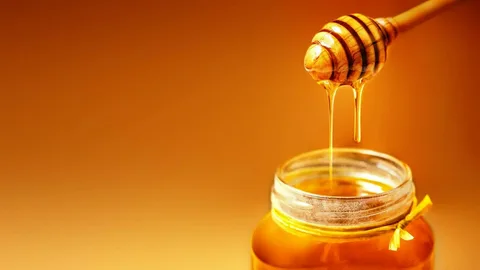
Raw honey is not vegan. The term “raw” describes how honey is processed after it leaves the hive — unheated, unfiltered — and does not change the act of removing it. Under The Vegan Society’s definition of veganism, which excludes all forms of animal exploitation, honey extraction fails the test regardless of processing method.
What Is Raw Honey — and How Does It Differ from Regular Honey?
Raw honey is honey kept below the natural temperature of a beehive — approximately 35°C — and left unfiltered after extraction. It retains its natural enzymes, antioxidants, and pollen content as a result.
Regular commercial honey is heat-treated and filtered. These steps extend shelf life and prevent crystallisation but reduce the honey’s antioxidant and enzyme content.
The difference between raw and commercial honey exists entirely in post-extraction processing. A honey bee uses a second dedicated stomach — the honey stomach, or crop — to carry nectar from flowers back to the hive, where enzymes begin converting it during transit. This conversion process is the same regardless of what happens next. The act of removing finished honey from the hive does not change whether the honey is kept raw or sent for commercial pasteurisation.
Is Honey — Raw or Otherwise — Considered Vegan?
No. Raw honey is not vegan under any processing method.
The Vegan Society’s definition is the governing standard:
“A philosophy and way of living which seeks to exclude — as far as is possible and practicable — all forms of exploitation of, and cruelty to, animals.”
Harvesting honey does not align with this definition, which targets exploitation rather than cruelty alone.
Bees are not necessarily killed during standard honey extraction. If veganism only opposed direct harm, some forms of honey harvesting might pass the test. Because veganism opposes exploitation — using any animal as a resource for human benefit — honey extraction fails at the point of taking, not at the point of harm.
Honey is the energy source bees produce to survive the months when flowers stop providing nectar. A single honey bee produces just one twelfth of a teaspoon of honey across its entire lifetime. Removing that store — raw or otherwise — is what veganism objects to.
What Does Commercial Beekeeping Actually Involve?
Commercial beekeeping involves a set of standard practices — wing clipping, selective breeding, hive culling, and antibiotic use — all oriented towards maximum honey yield.
- Queen bees have their wings clipped to prevent swarming.
- Colonies undergo selective breeding that narrows the gene pool and raises susceptibility to disease and large-scale die-offs.
- Artificial insemination creates multiple queens quickly.
- Hives are sometimes culled post-harvest to cut winter feeding costs.
- Extracted honey is replaced with sugar syrup that lacks the micro-nutrients bees require.
- Large-scale operations treat hives with antibiotics.
A study published in Science found that 75 per cent of honey samples taken worldwide were contaminated with neonicotinoid insecticides. A honey bee visits up to 1,500 flowers to fill its honey stomach once. There are only seven recognised species of honey bee, used across the commercial honey industry globally.
These are the standard operating conditions of the industry that produces all commercially available honey, raw or otherwise.
Does Ethical or Organic Beekeeping Make Raw Honey Vegan?
No. Even on the most carefully managed ethical bee farm, raw honey is not vegan under The Vegan Society’s framework.
Ethical beekeeping uses smaller operations that leave adequate winter honey stores in the hive. These farms avoid wing clipping, use natural insemination, and allow colonies to forage across diverse plants. Agnes Bobvos of Raw Artisan Honey describes the principle plainly: on a well-managed ethical farm, “bees never work harder than they naturally would.”
Some people who follow an otherwise vegan diet include honey from these sources. They are known as beegans. This remains a minority position within vegan communities and is a separate, distinct category rather than a form of veganism.
Veganism applies an exploitation standard, not a welfare standard. The relevant question is not whether the bees were treated well, but whether they were used as a resource for human benefit.
Even on ethical farms the beekeeper decides how much honey counts as surplus. Bees cannot consent to this arrangement.
The Vegan Society’s position is unambiguous: harvesting honey does not align with its definition of veganism regardless of the scale or ethics of the operation that produced it.
Is There a Difference Between “Vegan” and “Plant-Based” When It Comes to Honey?
Yes — and the difference directly changes the answer about honey.
Plant-based describes a self-defined dietary pattern with no formal standard. Some people who identify as plant-based choose to include honey, particularly from ethical sources. Veganism follows the published definition from The Vegan Society. Under that definition, honey is excluded because its production involves the use of bees as a resource.
The question “is raw honey vegan” applies the vegan framework, not the plant-based one. If the reader identifies as plant-based rather than vegan, the answer depends on their personal criteria rather than an external standard.
What Can Vegans Use Instead of Honey? UK-Available Alternatives
Vegans can replace honey with several UK-available sweeteners suited to baking, cooking, and drinks.
Golden syrup — Lyle’s Golden Syrup is available in every major UK supermarket. It dissolves readily in cold liquids, making it the most practical substitute in dressings and cold drinks.
Date syrup — made by blending dates, this syrup has a lower glycaemic index and contributes potassium. It is stocked at Tesco, Sainsbury’s, Waitrose, and Holland & Barrett.
Maple syrup — extracted from the sap of maple trees and graded by colour. Grade B is the darkest and contains higher concentrations of phytochemicals. It is widely available across UK supermarkets.
Agave nectar — produced from the agave plant, it has a lower glycaemic index than honey but a high fructose content. Available from major UK supermarkets and Holland & Barrett.
Molasses — a by-product of sugar refining with a strong, robust flavour. Best suited to baking. Available in UK supermarkets and health food shops.
The Vegan Society registers bee-free honey products with its Vegan Trademark. The full register of certified products is searchable at.
The British Nutrition Foundation classifies honey, maple syrup, molasses, agave, and golden syrup as free sugars. These alternatives are functional replacements for honey — not nutritionally superior options.
What Other Bee Products Do Vegans Avoid?
Vegans also exclude beeswax, royal jelly, bee pollen, and propolis. Each is produced by or derived from bees, and each is collected using the same principle that applies to honey: the bee is used as a resource for human benefit without consent.
These products appear in UK health food shops and supplement ranges as well as online retailers. Veganism excludes them on the same grounds as raw honey — their source, not their packaging, is what determines their status.
Frequently Asked Questions
Why is honey not vegan if bees aren't killed?
Veganism, as defined by The Vegan Society, excludes any use of animals for human benefit — not only direct harm or killing. Taking honey removes the bees' winter food supply. The bees cannot consent to this. The absence of killing does not change the classification under that definition.
Does ethical or organic beekeeping make honey vegan?
No. Ethical beekeeping improves conditions for bees and avoids practices such as wing clipping and forced breeding. It does not change the core act: the beekeeper removes the bees' food for human use. Veganism opposes this as animal use regardless of how carefully the operation is managed.
What is the difference between raw honey and regular honey?
Raw honey stays below the natural hive temperature of approximately 35°C and remains unfiltered, preserving enzymes and pollen. Regular commercial honey receives heat treatment and filtration. The source and extraction method are the same in both cases.
What can vegans use instead of raw honey in the UK?
UK-available vegan alternatives include Lyle's Golden Syrup, date syrup, maple syrup, agave nectar, and molasses. The Vegan Society also registers bee-free honey products under its Vegan Trademark, searchable at vegansociety.com/our-work/vegan-trademark-search. All count as free sugars under UK dietary guidance.
What is a beegan?
A beegan follows an otherwise vegan diet but includes honey and other bee products, often from small-scale ethical sources. This is a minority position within vegan communities. It is a separate dietary category and does not meet The Vegan Society's formal definition of veganism.