- No Products In The Cart
- start shopping
Raw Honey Benefits: 10 Evidence-Based Reasons to Make the Switch
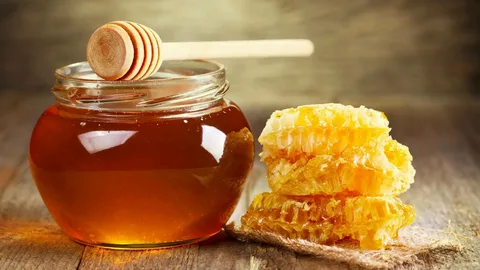
Raw honey — unpasteurised, unfiltered, and enzyme-intact — delivers measurable health advantages that pasteurised honey cannot match. Raw honey retains antioxidant polyphenols, antibacterial hydrogen peroxide generated by the enzyme glucose oxidase, and prebiotic oligosaccharides that heat processing destroys. Research links raw honey to reduced inflammation, improved gut health, wound healing support, sore throat relief, and neuroprotective effects.
What Is Raw Honey — and How Is It Different from Regular Honey?
Raw honey is honey that has never been heated above hive temperature and has not been finely filtered. Unlike pasteurised honey, it retains its full spectrum of active enzymes, pollen grains, and bioactive polyphenols.
Pasteurised honey — the type that dominates UK supermarket shelves — is heated to between 63°C and 77°C to kill yeast, prevent crystallisation, and create a uniform appearance. That heat inactivates the enzymes that give raw honey its antibacterial and digestive properties.
UK honey labelling is regulated under the Honey (England) Regulations 2015. The regulations set mandatory quality parameters including a minimum diastase number of 8 on the Schade scale. The maximum hydroxymethylfurfural (HMF) level permitted is 40 mg/kg.
The confusion starts at the label. UK shoppers see the words “raw,” “pure,” “natural,” and “organic” on honey jars and assume they all mean the same thing. They do not.
| Label Term | What It Means in the UK | Does It Mean Raw? |
| Raw | Unpasteurised, unheated above hive temperature, enzyme-intact | ✅ Yes |
| Pure | No added ingredients — but may be pasteurised | ❌ Not necessarily |
| Natural | Minimal processing; no legal definition specific to honey | ❌ Not necessarily |
| Organic | Produced to certified organic standards; may still be pasteurised | ❌ Not necessarily |
| Set / Creamed | Crystallised texture — says nothing about whether the honey was heated | ❌ Not necessarily |
Importantly, the term “raw” itself is not legally defined under the Honey (England) Regulations 2015 — which means a jar labelled “raw” is not automatically guaranteed to be unprocessed. Buying from a named-origin producer who can confirm cold extraction is the most reliable approach.
One practical quality marker is the diastase number (DN). Diastase is a heat-sensitive enzyme naturally present in honey. Fresh raw honey typically has a DN between 15 and 30+, while the legal minimum under the Honey (England) Regulations 2015 is 8. A DN below 8 indicates heat damage. Another marker is HMF — a compound that rises with heating and storage. The UK legal maximum is 40 mg/kg.
As UK beekeeping resource Beginner Beekeeping explains: “crystallisation is a good sign that your honey hasn’t been heat-treated or filtered”. Genuine raw honey often crystallises faster than heavily filtered commercial honey because the retained pollen grains act as nucleation points for crystal formation. Set honey is safe, nutritionally intact, and easier to re-liquify than most people realise: simply place the sealed jar in warm water below 35°C for 15–20 minutes. UK beekeeping guidance notes that warming to 35°C — the natural hive temperature — is the correct approach to preserve enzymes.
At Natures Oasis, every jar is sourced directly from the wild landscapes of Zaragoza, Spain — unblended and unheated, with each harvest varying in colour and texture according to the season and the flowers the bees visited.
What Are the Proven Health Benefits of Raw Honey?
Raw honey delivers at least 10 documented health benefits, each driven by bioactive compounds that pasteurisation destroys or significantly reduces.
1. Raw Honey Is a Concentrated Source of Antioxidants
Raw honey contains polyphenols and flavonoids — plant-derived antioxidant compounds that neutralise free radicals before they cause oxidative cell damage. Oxidative stress is linked to heart disease, cancer, and premature ageing. Some varieties of raw honey contain antioxidant levels comparable to fruits and vegetables.
Quercetin — one of the most studied flavonoids present in raw honey and its propolis traces — has demonstrated anti-inflammatory and cardioprotective effects in published research. A 2023 review of studies suggested raw honey may have potential protective effects on the respiratory, gastrointestinal, cardiovascular, and nervous systems.
Research comparing honey antioxidant activity consistently finds that darker varieties — such as buckwheat and forest honeys — contain higher polyphenol concentrations than lighter varieties such as acacia.
2. Raw Honey Has Three Distinct Antibacterial Mechanisms
Raw honey fights bacteria through three simultaneous mechanisms — not one.
Hydrogen peroxide production. Bees add the enzyme glucose oxidase (GOx) to nectar from their hypopharyngeal glands. When raw honey is diluted — for example when mixed with saliva — GOx converts glucose into hydrogen peroxide (H₂O₂) and gluconic acid. The H₂O₂ targets both gram-positive and gram-negative bacteria by disrupting their cell walls. Research confirms that the synergy between hydrogen peroxide and gluconic acid produces membrane depolarisation and growth inhibition of E. coli.
Acidic pH. Raw honey has a pH between 3.2 and 4.5. Most pathogenic bacteria require a pH of 6.5 to 7.5 to reproduce. Raw honey’s acidity creates an environment inherently hostile to bacterial growth.
High osmolarity. Raw honey is approximately 80% sugars by weight. This high sugar concentration draws water out of bacterial cells through osmosis, dehydrating and killing them. The water activity (Aw) of honey ranges from 0.5 to 0.65 — well below the threshold at which most microorganisms can survive.
Pasteurisation breaks this triad. Research on glucose oxidase heat stability confirms that GOD remains stable at temperatures up to 55°C, but its activity declines significantly at 55–70°C — the range used in commercial honey processing.
One important caveat: antibacterial activity varies by honey variety and concentration. Store-bought raw honey is not sterile and must never be applied to open wounds. Only licensed, medical-grade honey dressings are inspected and sterile enough for clinical wound care.
3. Raw Honey Actively Reduces Inflammation
Raw honey’s polyphenols — particularly quercetin, pinocembrin, and caffeic acid phenethyl ester (CAPE) — downregulate a cellular signalling pathway called NF-κB. NF-κB is a switch inside cells that triggers inflammatory responses. When polyphenols inhibit this switch, the production of pro-inflammatory compounds decreases.
Chronic, low-grade inflammation is a contributing factor in cardiovascular disease, metabolic syndrome, and neurodegeneration. The polyphenols responsible for this effect are heat-sensitive — pasteurisation reduces their concentration and activity.
Raw honey is not a replacement for prescribed anti-inflammatory medication. It is a food with measurable anti-inflammatory properties that may complement a balanced diet — particularly when chosen from darker, higher-polyphenol varieties.
4. Raw Honey Supports Gut Health as a Prebiotic
Raw honey is a prebiotic, not a probiotic. A prebiotic is a substance that feeds beneficial gut bacteria. Raw honey does not contain significant quantities of live bacteria — it feeds the ones already living in your gut.
The prebiotic compounds in raw honey are oligosaccharides — including fructo-oligosaccharides (FOS). These are non-digestible carbohydrates that pass through the stomach and small intestine intact, reaching the colon where beneficial bacteria ferment them.
Honey is primarily composed of 55–80% glucose and fructose. A further 10–25% consists of a complex mixture of carbohydrates including sucrose, maltose, and other oligosaccharides. The remaining approximately 3% comprises enzymes, proteins, amino acids, polyphenols, minerals, and vitamins.
Research published in the Journal of Agricultural and Food Chemistry found that honey oligosaccharides selectively promoted the growth of Bifidobacterium and Lactobacillus species, while showing inhibitory effects against potentially harmful pathogens. A 2022 review in Frontiers in Nutrition confirmed that honey acts as a prebiotic by promoting Bifidobacterium spp. and Lactobacillus spp. populations while alleviating symptoms of constipation and ulcerative colitis in animal models.
The practical application: 1–2 teaspoons of raw honey added to room-temperature yoghurt or porridge combines a prebiotic (honey) with a probiotic (yoghurt cultures), creating a synbiotic food pairing.
5. Raw Honey Soothes Sore Throats and Suppresses Coughs
Raw honey coats the throat with a viscous layer that reduces irritation, while its antibacterial polyphenols and hydrogen peroxide help reduce the microbial load that drives upper respiratory tract infections (URTIs).
A 2021 systematic review found that honey could be superior to other conventional forms of care for improving URTIs, including cough frequency and severity. Research also suggests that honey’s antibacterial and anti-inflammatory properties are effective in relieving nocturnal cough and common cold symptoms.
The British Heart Foundation’s senior dietitian Tracy Parker notes that the real benefit of adding honey to a warm drink may come partly from the warmth and hydration rather than the honey alone.
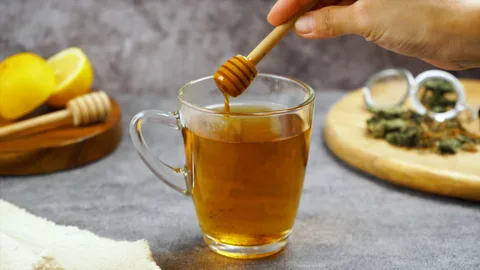
For maximum benefit, add raw honey to warm water — not boiling. Research on glucose oxidase heat stability confirms that GOD activity begins to decline above 55°C, meaning boiling water or very hot drinks risk degrading the antibacterial enzyme that gives raw honey its edge over pasteurised alternatives.
6. Raw Honey Supports Wound Healing — With One Important Caveat
Raw honey’s wound-healing properties come from its antibacterial triad (hydrogen peroxide, acidic pH, and osmolarity) combined with one additional property: raw honey is hygroscopic — it draws moisture from the surrounding environment. In a wound, this creates a moist healing environment that supports tissue repair and cell regeneration.
Some hospitals use medical-grade honey as a treatment for wounds, including burns and diabetic foot ulcers. Research confirms that various honey types show potential for microbial inhibition and wound healing.
Store-bought raw honey is not sterile. Never apply raw honey from a jar to an open wound. Medical-grade honey dressings are gamma-irradiated to eliminate pathogens while preserving bioactive compounds. Use those under clinical guidance only.
7. Raw Honey Is a Phytonutrient Powerhouse That Supports Immunity
Phytonutrients are plant-derived compounds that protect plants from ultraviolet radiation, insects, and pathogens. Bees concentrate these compounds from nectar into honey. Raw honey retains them; pasteurisation degrades them.
The phytonutrients in raw honey are responsible for its antioxidant, antibacterial, and antifungal properties. They are also the basis for raw honey’s immune-supporting effects.
Unfiltered raw honey also contains traces of bee pollen and propolis — both of which add phytonutrient diversity. Propolis, a waxy substance bees make from plant resin, contains bioactive flavonoids such as quercetin, pinocembrin, galangin, and chrysin — each with demonstrated antimicrobial and immunomodulatory properties.
No single compound delivers raw honey’s benefits alone — it is the unprocessed, intact complex that matters.
Raw honey’s anti-inflammatory polyphenols and cardiovascular-supporting antioxidants are relevant to men’s health in the same way as for women. To our knowledge, no peer-reviewed human clinical trials have examined raw honey’s effects on male hormonal health specifically.
8. Raw Honey May Benefit Brain Health and Memory
A 2022 review of research suggested that honey may support memory function, provide neuroprotective effects by countering oxidative stress in the brain, reduce risks of metabolic syndrome, and improve mood and stress response.
Two specific compounds present in raw honey’s propolis traces — pinocembrin and CAPE — have demonstrated neuroprotective properties in preclinical studies. Pinocembrin has been described as eliciting antioxidant and anti-inflammatory effects on the central nervous system by modulating the NF-κB pathway.
Additional human studies are needed before raw honey can be recommended as a brain-health intervention.
9. Raw Honey May Support Heart Health and Cholesterol Levels
Research suggests that honey consumption is linked to lower fasting blood sugar levels, lower total cholesterol, and lower triglyceride levels. Mayo Clinic notes that honey may help lower cholesterol and improve heart health.
These effects are likely driven by the polyphenol antioxidants in raw honey, which reduce oxidative stress — a key driver of cardiovascular damage.
The British Heart Foundation’s senior dietitian Tracy Parker states that there is no strong evidence or official health claims to back the cardiovascular benefits of honey, and notes that obtaining any potential benefit would require approximately 80g of honey per day — a quantity that would also deliver an unhealthy amount of free sugar.
The honest position: raw honey contains compounds with demonstrated cardiovascular-relevant properties. Consuming 1–2 teaspoons per day within a balanced diet is unlikely to cause harm and may contribute modestly to heart health — but raw honey is not a cardiovascular treatment.
10. Raw Honeycomb Maximises Pollen and Propolis Exposure
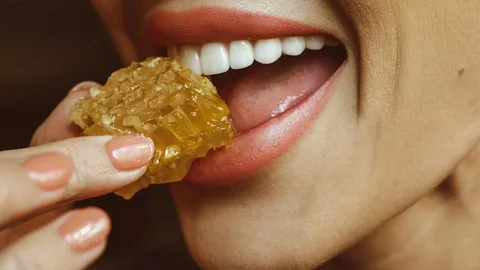
Raw honeycomb is raw honey still sealed inside the beeswax cells built by the bees. It is the most unprocessed form of honey available — nothing has been strained, spun, or separated.
Chewing raw honeycomb releases the honey contained within each wax cell. The beeswax itself is food-grade and safe to swallow. It passes through the digestive system largely undigested and does not contribute significant nutritional value on its own. Some people chew it and discard the wax; both approaches are safe.
The advantage of honeycomb over strained raw honey is greater mechanical pollen exposure. Because honeycomb has not been strained through any mesh, it retains a higher concentration of pollen grains and may contain trace propolis at the wax-cap interfaces — both of which add to the phytonutrient profile. The honey inside is nutritionally identical to jarred raw honey from the same harvest.
What Nutrients Does Raw Honey Actually Contain?
One tablespoon (21g) of raw honey contains 64 calories and 17g of sugar. One teaspoon (7g) contains 21 calories and 6g of sugar.
Raw honey is primarily composed of 55–80% glucose and fructose, with a further 10–25% comprising complex carbohydrates including oligosaccharides. The remaining approximately 3% consists of enzymes, proteins, amino acids, polyphenols, minerals, and vitamins. It is that final fraction that sets raw honey apart from pasteurised honey and refined sugar.
| Nutrient | Raw Honey (1 tbsp / 21g) | Pasteurised Honey (1 tbsp / 21g) | White Sugar (1 tbsp / 12g) |
| Calories | 64 | 64 | 46 |
| Sugars | 17g | 17g | 12g |
| Polyphenols / Antioxidants | Present (retained) | Reduced by heat processing | Absent |
| Enzymes (diastase, glucose oxidase) | Active and intact | Inactivated by pasteurisation | Absent |
| Pollen content | Present (if unfiltered) | Largely removed by filtration | Absent |
| Vitamins & Minerals (trace) | Calcium, magnesium, manganese, potassium, zinc, riboflavin, niacin, pantothenic acid, phosphorous | Trace amounts (reduced) | Absent |
| Glycaemic Index | ~50 | Not separately established | ~80 |
| Prebiotic oligosaccharides | Present | Reduced | Absent |
Raw honey’s glycaemic index is approximately 50, compared with white sugar’s GI of approximately 80 — because honey contains more fructose, which is absorbed more slowly than glucose.
The NHS recommends that adults consume no more than 30g of free sugars per day — roughly 7 teaspoons. That means 1–2 teaspoons (7–14g) of raw honey per day stays well within the limit while leaving room for other dietary sugars.
The honest framing: raw honey’s vitamin and mineral content is real but modest. Its primary advantage over pasteurised honey lies in its bioactive compounds — the polyphenols, active enzymes, and oligosaccharides — not in micronutrient density.
Are There Any Risks or Side Effects of Raw Honey?
Yes. Raw honey is safe for most adults, but five specific groups need caution:
- Infants under 12 months. This is the most critical safety rule. Both raw and pasteurised honey can carry Clostridium botulinum spores. In infants, whose gut flora is not yet mature enough to prevent spore germination, these spores can produce a toxin causing infant botulism — a rare but potentially fatal condition.
Symptoms include constipation, poor feeding, lethargy, weak cry, and progressive muscle weakness. Never give honey of any kind to a baby under one year old.
- Honey allergy. Raw honey may contain bee pollen, which can trigger allergic reactions in sensitive individuals. Symptoms range from mild (itching, swelling) to severe (wheezing, dizziness, anaphylaxis).
- Immunocompromised individuals. People with weakened immune systems should avoid raw honey because it is unpasteurised and may carry bacterial contaminants.
- Pregnancy. Raw honey is generally safe during pregnancy. The botulism risk applies specifically to infants under 12 months, whose digestive systems cannot yet prevent C. botulinum spore germination. Adult digestive systems — including those of pregnant women — are equipped to handle these spores. Consult your midwife or GP if you have specific concerns.
- Drug interactions. Mayo Clinic notes that taking phenytoin (Dilantin) with honey may increase the risk of phenytoin side effects Speak with your doctor if you take anti-seizure medication.
Raw honey’s acidity (pH 3.2–4.5) also makes it mildly erosive to tooth enamel over time. Rinse your mouth with water after eating it directly from the spoon.
How Do You Use Raw Honey Every Day?
Stick to 1–2 teaspoons (7–14g) per day. This stays within the NHS’s 30g daily free-sugar limit and delivers enough bioactive compounds to be meaningful.
Five practical ways to use raw honey without destroying what makes it valuable:
- Add it to warm water or herbal tea — not boiling. Research confirms that glucose oxidase remains stable at temperatures up to 55°C, but its activity declines significantly above that threshold. Let your drink cool until comfortable to hold, then stir in the honey.
- Drizzle over porridge, yoghurt, or fruit at room temperature. Combining raw honey with live-culture yoghurt creates a synbiotic food — a prebiotic and probiotic together.
- Use as a sugar substitute in cold dressings and dips. Salad dressings, dipping sauces, and smoothies are ideal vehicles because no heat is involved.
- Eat it straight from the spoon. One teaspoon of raw honey before a morning glass of water is a simple daily ritual.
- Store in a sealed glass jar at room temperature. Keep it away from direct light and heat sources. Never refrigerate raw honey — cold accelerates crystallisation and thickens the texture unnecessarily. If your honey crystallises, place the jar in warm water (below 35°C) for 15–20 minutes. Never microwave it.
Save raw honey for unheated applications. If you need honey for baking or high-heat cooking, use pasteurised honey — heating raw honey above 55–70°C deactivates its glucose oxidase and negates its bioactive advantage.
Does Local Raw Honey Help with Hay Fever?
Current clinical evidence does not confirm that local raw honey reliably reduces hay fever symptoms — but the hypothesis is biologically plausible, and the research is worth understanding.
The idea is rooted in the concept of sublingual immunotherapy (SLIT). Repeated exposure to tiny doses of an allergen can gradually train the immune system to tolerate it. Since raw, unfiltered honey contains trace amounts of local pollen, the theory proposes that eating it regularly acts as a form of low-dose oral desensitisation.
There is one fundamental problem with this hypothesis in the UK. Most UK hay fever sufferers are allergic to grass pollen, which peaks between late May and July. Bees collect flower pollen, not grass pollen. The pollen grains found in raw honey come from flowering plants — not from the grasses driving most seasonal allergic rhinitis.
The most widely cited clinical trial is a 2002 randomised controlled study from the University of Connecticut involving 36 participants. It found no significant difference in allergy symptoms between people consuming local unfiltered honey, commercially processed honey, and a corn-syrup placebo.
Mayo Clinic states directly that research studies have not found that taking honey eases seasonal allergy symptoms .
The honest verdict: eating local raw honey is safe for most people and carries general nutritional benefits, but it should not replace evidence-based allergy treatments such as antihistamines or immunotherapy prescribed by your GP.
How Do You Choose and Store Genuine Raw Honey in the UK?
Look for the word “raw” or “unpasteurised” on the label. If it is not there, assume the honey has been heat-treated, regardless of what other words appear.
| ✅ What to Look For | ❌ What to Avoid |
| “Raw” or “unpasteurised” on the label | “Pure” as a proxy for raw — it does not mean raw |
| “Cold extracted” or “unfiltered” | Added glucose syrup or sweeteners in the ingredients |
| Crystallisation in the jar (sign of authenticity) (source) | Honey that never crystallises (may indicate heavy filtration or high-fructose content) |
| Named origin or single-source provenance | Unlabelled “produce of more than one country” blends |
| Diastase number ≥ 15 (ask artisan producers) | DN below 8 — indicates heat damage (source) |
UK honey labelling is governed by the Honey (England) Regulations 2015 (source), which sets compositional requirements including diastase activity and HMF limits. The regulation does not legally define the term “raw” — meaning the label alone is not sufficient proof of quality (source). A named-origin producer who can confirm cold extraction and provide a diastase number is the most reliable source.
UK farmers’ markets and specialist online retailers like Natures Oasis are among the most reliable sources for verified raw honey. Every jar from Natures Oasis is sourced directly from the wild landscapes of Zaragoza, Spain — unblended and unheated, with each harvest varying in colour and texture according to the season and the flowers the bees visited.
Storage: keep raw honey in a sealed glass jar at room temperature, away from direct sunlight and heat. Do not refrigerate — cold thickens the texture and speeds up crystallisation. Raw honey stored correctly has an indefinite shelf life because its water activity (Aw 0.5–0.65) and acidic pH prevent microbial growth (source).
To re-liquify crystallised honey, place the sealed jar in a bowl of warm water — no hotter than 35°C — for 15–20 minutes (source). Never microwave raw honey. Microwave heating is uneven and rapidly pushes localised temperatures above the enzyme-degradation threshold.
If your honey has changed colour dramatically, developed an alcoholic or fermented smell, or shows visible mould, discard it. These are signs of moisture contamination — not of ageing.
Frequently Asked Questions
Does heating raw honey destroy its benefits?
Yes. Research confirms that glucose oxidase remains stable at temperatures up to 55°C, but its activity declines at 55–70°C (source). Adding raw honey to boiling water or using it in baking removes most of its bioactive advantage. Stir it into warm drinks and unheated foods to preserve its properties.
How much raw honey should I eat per day?
1–2 teaspoons (7–14g) per day is a practical daily amount. This stays well within the NHS-recommended 30g daily free-sugar limit for adults (source). Raw honey contains 21 calories per teaspoon — the advantage over pasteurised honey is in its bioactive compounds, not in extra servings.
Why has my raw honey gone solid — is it still good?
Yes. Crystallised raw honey is safe and nutritionally identical to liquid raw honey. Crystallisation is a sign of authenticity, not spoilage (source). To re-liquify, place the jar in warm water below 35°C for 15–20 minutes. Never microwave raw honey.
What is the difference between raw honey and manuka honey?
Raw honey is any unpasteurised, unheated honey — it describes a processing method, not a variety. Manuka honey is produced from the nectar of the Mānuka tree (Leptospermum scoparium) in New Zealand and Australia, and may be raw or pasteurised. Its key active compound is methylglyoxal (MGO) .
Is raw honey better than regular honey for gut health?
Yes, for gut health specifically. Raw honey retains prebiotic oligosaccharides — including fructo-oligosaccharides (FOS) — that feed beneficial gut bacteria including Lactobacillus and Bifidobacterium species (source). Pasteurisation may reduce these compounds. Regular pasteurised honey provides sweetness but limited prebiotic benefit.