- No Products In The Cart
- start shopping
Best Raw Honey UK 2026: 8 Jars Reviewed and Compared
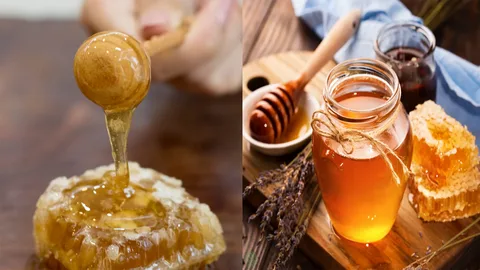
Raw honey is the UK buyer’s most verifiable form of premium honey — and the eight options reviewed here range from £2.65 to £5.00 per 100g. The best choices share four qualities: a named single origin, a stated extraction temperature below 40°C, natural crystallisation over time, and pollen retained in the jar.
The 8 Best Raw Honeys to Buy in the UK Right Now
The best raw honeys in the UK share five verifiable qualities:
- A named single origin — region, country, or named apiary, not “blend of EU and non-EU honeys”
- Extraction temperature stated on the label or brand website (below 40°C)
- Natural crystallisation over weeks or months — not engineered to stay liquid
- Pollen retained — labelled “unfiltered” or “coarse-filtered” only
- A traceable beekeeper or producer behind the jar
Prices were verified from brand websites in July 2026. Verify current prices before purchasing — artisan producers update pricing seasonally.
Northumberland Honey Co — Heather Honey (340g, £12)
Origin: Northumberland heather moors and Cumbria, England Extraction: Never heated above hive temperature; not pasteurised Floral source: Ling heather (Calluna vulgaris), monofloral Crystallisation: Thixotropic — firm gel in the jar, becomes fluid when stirred Third-party validation: SALSA certified; DASH scheme member (Disease Accreditation Scheme in Honey Bees, administered by FERA); member of the Bee Farmers Association; individually numbered jars traceable to the hive location Best for: Cheese boards, stirring into porridge, gifting to someone who wants a distinctly British flavour Where to buy: northumberlandhoney.co.uk — free shipping on orders over £60; next-day dispatch on orders placed before 1pm (northumberlandhoney.co.uk)
Heather honey’s thixotropic texture — firm gel at rest, fluid when stirred — is caused by colloidal proteins in the nectar. No processing step creates this property (sciencedirect.com/science/article/abs/pii/S0260877411000252).
Northumberland Honey Co — Soft Set Wildflower Honey (340g, £9)
Origin: Tyne Valley / Hadrian’s Wall area, Northumberland Extraction: Never heated above hive temperature; not pasteurised Floral source: Mixed wildflower (polyfloral); summer harvest Crystallisation: Controlled fine-grain set; no heat applied Third-party validation: SALSA certified; DASH scheme member; individually numbered jars Best for: Everyday toast, spreading, first raw honey purchase, gifting Where to buy: northumberlandhoney.co.uk
Laverde Artisan — Raw Sicilian Wildflower Honey (200g, £9)
Origin: Single-origin apiaries in Caltanissetta, central Sicily, at 600–900m altitude Extraction: Cold-extracted below 35°C; unfiltered; pollen, propolis, and enzymes intact Floral source: 20+ wildflower species including sulla, wild thyme, citrus blossom, and lavender; batch varies by season Crystallisation: Natural; crystallises over months — proof of raw status Third-party validation: 270+ Google Reviews at 4.9 stars; available at 30+ London retailers; also available on Deliveroo for same-day delivery across central London (laverdeartisan.com) Best for: Breakfast bowl with Greek yoghurt, cheese pairings, gifting, daily tonic use Where to buy: laverdeartisan.com — free UK delivery on orders over £40; 30-day money-back guarantee including after opening
Laverde Artisan — Sulla Blossom Monofloral Honey (200g, £10)
Origin: Single-origin, Caltanissetta, central Sicily Extraction: Cold-extracted below 35°C; unfiltered Floral source: Hedysarum coronarium (Sulla) only; spring bloom in May–June (pollenatlas.net/plants/leguminosae/hedysarum/hedysarum-coronarium-l); limited annual harvest Crystallisation: Fine crystalline; sets almost solid Third-party validation: 270+ Google Reviews at 4.9 stars; 30-day money-back guarantee (laverdeartisan.com) Best for: Cheese boards (aged pecorino, provola), purists who want a single-blossom profile, gifting for food enthusiasts Where to buy: laverdeartisan.com
HoneyBee & Co — Raw Acacia Honey (280g, £10.99)
Origin: Transylvanian acacia forests, Romania — Nistor family apiary, six generations of beekeeping Extraction: Never heated above 40°C; cold-extracted; pollen retained Floral source: Robinia pseudoacacia (acacia); monofloral; blooms April to June (plants.ces.ncsu.edu/plants/robinia-pseudoacacia/) Crystallisation: Extremely slow — peer-reviewed analysis of acacia honey composition confirms a fructose-to-glucose ratio above 1.40 for monofloral acacia (pmc.ncbi.nlm.nih.gov/articles/PMC6423237/); fructose crystallises more slowly than glucose, keeping acacia honey clear and liquid far longer than most other varieties Third-party validation: 4.9 stars across 53 verified Google Reviews; featured in Vogue’s Summer Hot List across three consecutive editions in summer 2024; SALSA-certified British supplier; NHS and Blue Light Card holders receive 15% off (honeybeeandco.uk/shop/) Best for: Drizzling, tea, salad dressings, daily use for buyers who prefer a honey that stays liquid Where to buy: honeybeeandco.uk — free UK delivery on 3+ jars; subscribe and save 20% (from £8.79/month)
HoneyBee & Co — Raw British Heather Honey (280g, £12.99)
Origin: Yorkshire Moors, United Kingdom — SALSA-certified British supplier Extraction: Cold-extracted; never heated above hive temperature; small-batch seasonal harvest Floral source: Ling heather (Calluna vulgaris); monofloral; blooms July to September in the UK (first-nature.com/flowers/calluna-vulgaris.php); harvested once per year Crystallisation: Firm and thixotropic — gel at rest, fluid when stirred — caused by colloidal proteins in heather nectar (sciencedirect.com/science/article/abs/pii/S0260877411000252) Third-party validation: SALSA certified; 4.9 stars across 53 verified Google Reviews (honeybeeandco.uk/shop/) Best for: Toast with salted butter, porridge, cheese boards, gifting Where to buy: honeybeeandco.uk
Bermondsey Street Bees — Urban Raw Honey (various sizes)
Origin: Multiple hives across London and Essex, England Extraction: Raw and minimally processed; natural flavours and nutrients preserved Floral source: Urban wildflower; polyfloral — London parks, gardens, and green spaces; seasonal variation Crystallisation: Natural crystallisation behaviour Third-party validation: Great Taste Awards — 2 Stars in 2021, 2022, and 2023 (greattasteawards.co.uk) Best for: London-based buyers who want hyper-local provenance; gifts with an urban beekeeping story Where to buy: bermondseystbees.com — check site for current jar sizes and prices
Gwenyn Gruffydd — Welsh Wildflower Honey (various sizes)
Origin: Carmarthen, Wales, United Kingdom Extraction: Artisan production; natural and minimally processed Floral source: Welsh wildflower; polyfloral Crystallisation: Natural Third-party validation: Great Taste Awards — 3 Stars in 2024; 2 Stars in 2022 and 2023 (greattasteawards.co.uk); TasteAtlas rating 4.5 Best for: Buyers who want a Great Taste Award–validated British option with Welsh provenance; gifting Where to buy: Check gwenyngruffydd.co.uk for current stock and sizing
Price Per 100g — Normalised Comparison Table
All prices verified July 2026.
| Brand | Product | Jar size | Price | Price per 100g | Free delivery threshold | Subscription |
| Northumberland Honey Co | Heather Honey | 340g | £12.00 | £3.53 | Orders over £60 | No |
| Northumberland Honey Co | Soft Set Wildflower | 340g | £9.00 | £2.65 | Orders over £60 | No |
| Laverde Artisan | Sicilian Wildflower | 200g | £9.00 | £4.50 | Orders over £40 | No |
| Laverde Artisan | Sulla Monofloral | 200g | £10.00 | £5.00 | Orders over £40 | No |
| HoneyBee & Co | Acacia (Transylvania) | 280g | £10.99 | £3.93 | 3+ jars | Yes (£8.79/mo) |
| HoneyBee & Co | Heather (Yorkshire) | 280g | £12.99 | £4.64 | 3+ jars | Yes (£10.39/mo) |
| Bermondsey Street Bees | Urban Wildflower | Check site | Check site | — | Check site | — |
| Gwenyn Gruffydd | Welsh Wildflower | Check site | Check site | — | Check site | — |
| Manuka (UMF 10+ benchmark) | Various UK brands | ~250g | £25–50 | £10–20 | Varies | Varies |
What Makes Raw Honey Actually Raw? How to Verify Any Jar Before You Buy
No UK law defines “raw honey” as a label term. The Honey (England) Regulations 2015 (SI 2015/1348, legislation.gov.uk/uksi/2015/1348/contents/made) specify permitted honey types — extracted, pressed, filtered, comb, and others — but “raw” does not appear among them as a reserved description. Any producer can print “raw” on a jar without meeting a legally defined standard.
Apply this checklist to every jar:
- Extraction temperature below 40°C stated?
- Crystallises naturally over weeks or months?
- Slightly cloudy appearance — not glass-clear?
- Named single origin — not a blend?
- Harvest date or batch number on the jar?
- Beekeeper or producer contactable by name?
- Labelled “unfiltered” or “coarse-filtered” only?
The hive brood nest operates at 33–36°C (journals.plos.org/plosone/article?id=10.1371%2Fjournal.pone.0148740). Honey extracted without exceeding that range retains its natural enzymes, pollen, and antimicrobial compounds. Pasteurised honey is typically heated above that threshold to extend shelf life and prevent crystallisation on retail shelves.
A raw honey left in a cool cupboard crystallises within weeks or months depending on variety. Pasteurised honey engineered to stay liquid for years will not crystallise.
Glass clarity in a honey labelled “raw” is a warning. Ultra-filtration removes pollen to create that appearance, and the Honey (England) Regulations 2015 define “filtered honey” as honey where pollen has been significantly removed (legislation.gov.uk/uksi/2015/1348/contents/made).
“Blend of EU and non-EU honeys” is the labelling used when honey comes from an untraceable multi-country supply chain — the opposite of verifiable raw honey. A harvest date and contactable producer allow you to follow up on any specific batch.
The honest tradeoff: The “raw” label is unregulated in the UK. Two jars priced similarly and both labelled “raw” can differ substantially in quality depending on extraction temperature, pollen retention, and hive-level traceability. Apply the seven-point checklist to every purchase, regardless of brand or price.
Which Type of Raw Honey Should You Buy? A Guide to the Varieties Available in the UK
For most UK buyers, the first decision is between monofloral and polyfloral honey — and it has direct buying implications.
Monofloral honey comes from bees foraging primarily one plant species during a single bloom window. Ling heather blooms July to September in the UK (first-nature.com/flowers/calluna-vulgaris.php); sulla blooms in May–June (pollenatlas.net/plants/leguminosae/hedysarum/hedysarum-coronarium-l); acacia blooms April to June (plants.ces.ncsu.edu/plants/robinia-pseudoacacia/). That limited harvest window makes genuine monofloral honey scarce and commands a higher price per 100g.
The trade-off is a distinct, repeatable flavour profile that carries the character of a single plant.
Polyfloral (wildflower) honey comes from bees foraging across many plant species simultaneously. The flavour shifts batch to batch and season to season. Wildflower honey is the better daily-use choice for most buyers: widely available, more affordable per gram, and more versatile in the kitchen.
UK and European Raw Honey Varieties — Comparison Table
| Variety | Common origin | Flavour profile | Crystallisation speed | Best use | Approx. UK price per 100g |
| Heather | British moorland (Northumberland, Yorkshire, Scotland) | Intense, floral, earthy; thixotropic gel texture caused by colloidal proteins | Firm gel set | Cheese boards, porridge, gifting | £3.50–£4.65 |
| Wildflower | UK, Sicily, Portugal, Romania | Complex, multi-floral; shifts by season | Medium; coarser grain over months | Everyday toast, baking, tea, breakfast | £2.65–£4.50 |
| Acacia | Romania, Hungary, Slovakia | Pale gold; mild, delicate sweetness | Very slow — fructose/glucose ratio above 1.40 keeps it liquid longest | Drizzling, tea, salad dressings, first raw honey | £3.90–£5.00 |
| Linden | Romania, Eastern Europe | Light golden; woody and minty character with balsamic undertones — caused by terpenes including linden ether (honeytraveler.com/single-flower-honey/linden-lime-basswood-honey/) | Medium to fast; fine crystals within 2–4 months | Tea, mild cheese, everyday use | £3.90–£4.50 |
| Sunflower | Romania, Eastern Europe | Bright golden; warm, buttery, clean | Very fast — fructose/glucose ratio of 0.81 drives crystallisation onset within 2–4 weeks (rawhoneyguide.com/blog/honey-fructose-glucose-ratio) | Baking, spreading | £3.50–£4.00 |
| Sulla (monofloral) | Sicily (spring bloom only) | Drier, lighter, slightly floral | Fine crystalline; sets almost solid | Cheese boards (aged cheeses), gifting | £5.00 |
| Soft set / creamed | UK, Europe | Depends on floral source; smooth regardless | Intentionally controlled fine-grain set; spreadable | Spreading on bread, toast, crumpets | £2.65–£3.90 |
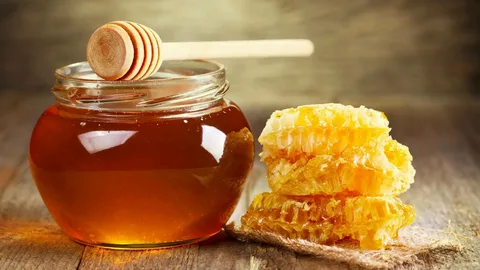
| Comb honey | UK, Europe | Most unprocessed form; fresh and waxy | N/A — consumed in the comb | Gifting, cheese boards, honey purists | Premium; check current prices |
Which Honey for Which Use?
| Use case | Recommended variety | Why |
| Everyday toast and breakfast | Wildflower or soft set wildflower | Complex flavour; widely available; good value |
| Cheese board | Heather or Sulla monofloral | Intensity matches strong cheeses; floral notes complement salt |
| Baking (as sugar substitute) | Sunflower or wildflower | Higher glucose; sets well; flavour survives moderate oven heat |
| Hot tea or warm drinks | Acacia or wildflower | Add after water cools below 60°C to retain enzymes |
| Gifting | Heather, Sulla, or a curated gift set | Distinctive flavour; clear provenance story; premium presentation |
| First raw honey purchase | Soft set wildflower | Familiar texture; not overwhelmingly intense |
| Hay fever support | Locally produced raw honey containing local pollen from your area | Some buyers consume local raw honey on the theory that small regular pollen exposure may support seasonal tolerance. The NHS does not recommend honey as a substitute for prescribed hay fever medication (nhs.uk/conditions/hay-fever/). If you choose to try it, select a honey explicitly labelled as containing local pollen, produced as close to your location as possible. |
One note on UK organic honey: A producer cannot certify UK-produced honey as organic under standard UK organic rules. Honey bees can forage several miles from the hive when conditions require it (pmc.ncbi.nlm.nih.gov/articles/PMC3281370/). No area surrounding a UK hive can be guaranteed to be exclusively organic. Imported honey from Spain, Greece, or Romania can carry organic certification from its country of origin under a different regulatory regime. These are not the same standard.
British Raw Honey vs. Imported Raw Honey — Which Is Better for UK Buyers?
Neither British nor imported raw honey is categorically superior. The right choice depends on use case, price per 100g, and whether supporting UK beekeeping is a priority.
Structured Comparison
| Attribute | British raw honey | Imported raw honey (Sicilian / Greek / Transylvanian) |
| Floral complexity | Lower species count per area in most British lowlands; heather moorland is a distinct exception | Mediterranean and Eastern European wildflower meadows carry higher wildflower species diversity in summer |
| Seasonal availability | Typically harvested July–September; supply is genuinely seasonal | Broader harvest windows depending on region; some varieties bloom in spring |
| UK beekeeping support | Directly supports UK beekeepers, UK farming, and UK pollinator health | Does not contribute to UK beekeeper income |
| Traceability standard | SALSA certification widely used by reputable UK producers; DASH scheme provides disease accreditation | Great Taste Awards available to all; named apiary and altitude detail varies by producer |
| Price range | £2.65–£4.65 per 100g across reviewed producers | £3.90–£5.00 per 100g for Sicilian and Transylvanian options |
| Flavour profile range | Narrower in lowland varieties; heather is irreplaceable | Wider range: acacia (delicate), wildflower (complex), sulla (dry and floral), thyme (intense, herbal) |
| Carbon footprint | Lower transport distance | Higher transport distance; no direct carbon comparison data is available for the specific producers reviewed here |
| Adulteration risk context | UK-produced honey from named beekeepers with hive traceability carries very low adulteration risk | The EU JRC coordinated action (March 2023) tested 320 honey consignments at EU borders; 46% were flagged as suspicious for adulteration (joint-research-centre.ec.europa.eu/jrc-news-and-updates/food-fraud-how-genuine-your-honey-2023-03-23_en). The UK Government’s scientific review noted methodological limitations and recommended treating flagged samples as requiring further investigation rather than confirmed fraud (gov.uk/government/publications/from-the-hives-honey-authenticity-survey-methodological-review). Buying imported honey direct from a named, traceable producer substantially reduces this risk |
Which Should You Choose?
Choose British raw honey if: Supporting UK beekeepers matters to you; you want heather honey; you want the shortest supply chain; or you prefer a milder flavour profile.
Choose imported raw honey if: You want the widest possible floral complexity from a single jar; you prefer acacia; you are drawn to Mediterranean terroir; or the price-per-100g table above points to better value for your intended use.
The honest tradeoff: A mass-market honey blended from British sources and lightly pasteurised is nutritionally inferior to a single-origin Transylvanian or Sicilian raw honey from a traceable beekeeper. Apply the seven-point verification checklist from Section 2 to every candidate, regardless of origin.
How Much Does Raw Honey Cost in the UK? A Price Guide for 2026
Raw honey from reputable artisan producers costs between £2.65 and £5.00 per 100g in the UK in 2026, based on verified prices from the eight producers reviewed. Manuka honey at UMF 10+ costs approximately £10–20 per 100g from UK retailers — three to four times the price of equivalent-quality artisan raw honey from a named origin.
The price range within the artisan category reflects four variables: floral source (monofloral commands more than polyfloral), jar size (larger jars offer better value per gram), producer scale, and country of origin.
Is the Premium Over Supermarket Honey Worth It?
A standard supermarket wildflower honey typically costs approximately £1.00–1.50 per 100g. The artisan raw honey premium pays for three things supermarket honey does not provide: retained enzymes, natural pollen, and verifiable origin. Enzymes are destroyed by heat treatment; pollen is removed by ultra-filtration; verifiable origin is absent from any jar labelled “blend of EU and non-EU honeys.”
The premium is worth it when you consume the honey without heating it — on cool toast, in yoghurt, in tea below 60°C. If you add it to a 200°C oven glaze, the enzymes are destroyed regardless of how the honey was produced — a cheaper option serves that purpose adequately.
Annual Cost of Ownership — Three Scenarios
For a household using one 280–340g jar per month:
| Scenario | Product | Monthly cost | Annual cost |
| Budget artisan | Northumberland Soft Set (340g, £9) | £9.00 | £108 |
| Mid-range artisan | HoneyBee & Co Acacia on subscription (280g, £8.79) | £8.79 | £105 |
| Premium artisan | Laverde Sulla Monofloral (200g, £10) | £10.00 | £120 |
| Manuka comparison | UMF 10+ (250g, ~£30 average) | £30.00 | £360 |
What Are the Health Benefits of Raw Honey That Justify the Price?
Raw honey retains enzymes, antioxidants, and pollen that pasteurisation destroys or filtration removes. The table below shows what survives in a genuinely raw jar versus what a pasteurised, ultra-filtered alternative contains.
| Attribute | Raw honey | Pasteurised honey |
| Enzymes (incl. glucose oxidase) | Present and active | Destroyed at temperatures above approximately 40°C |
| Antioxidants / flavonoids | Present; contribute to flavour depth | Significantly reduced by heat treatment |
| Natural pollen | Present — creates slight cloudiness; provides traceability | Removed by ultra-filtration |
| Crystallisation behaviour | Crystallises naturally — sign of authenticity | Engineered to stay liquid — sign of processing |
| Antimicrobial activity | Active hydrogen peroxide production via glucose oxidase enzyme | Largely absent — enzyme destroyed by heat |
The glucose oxidase enzyme in raw honey produces hydrogen peroxide on contact with moisture — the basis for honey’s traditional use in soothing sore throats. The NHS includes a hot lemon and honey drink as a self-care suggestion for coughs and sore throats (nhs.uk/symptoms/cough/). Raw honey may also act as a prebiotic, supporting beneficial gut bacteria — the evidence base for this is preliminary.
⚠️ Safety — mandatory: Raw honey must never be given to children under 12 months old. This applies to all honey, raw or pasteurised. Honey can contain Clostridium botulinum spores. An infant’s immature digestive system cannot neutralise them. The CDC states directly: “Do not give your child honey before 12 months” (cdc.gov/infant-toddler-nutrition/foods-and-drinks/foods-and-drinks-to-avoid-or-limit.html). After the first birthday, raw honey is safe for everyday consumption.
How to Store Raw Honey and Get the Most From Every Jar
Raw honey stored correctly does not expire. Its low water content and natural antimicrobial chemistry prevent microbial growth indefinitely when the jar is kept sealed and away from moisture.
Four rules for storing raw honey:
- Keep it in a cool, dark location
- Keep the lid firmly sealed — air introduces moisture, which can trigger fermentation; the Honey (England) Regulations 2015 set a maximum water content of 20% for most honey types (legislation.gov.uk/uksi/2015/1348/schedules), above which fermentation risk increases substantially
- Store at room temperature, not in the fridge — refrigeration accelerates crystallisation with no quality benefit
- Use a clean, dry spoon every time — water from a wet spoon raises the local water content and can trigger fermentation
Crystallisation is not spoilage. Every genuine raw honey crystallises eventually. Sunflower honey sets firm within 2–4 weeks of jarring (rawhoneyguide.com/blog/honey-fructose-glucose-ratio); acacia honey may stay liquid for a year or more. All are equally raw.
How to reliquefy crystallised raw honey:
- Place the sealed jar in a bowl of warm water
- Check the water temperature — must not exceed 40°C
- Leave for 15–30 minutes, stirring gently once or twice
- Do not microwave
- Do not use boiling water
Andrew Bate is a beekeeper and the author of The Apiarist, a technical beekeeping publication. He notes that the brood nest at the centre of a working hive holds at “a near-invariant 34 and a bit degrees Centigrade” (theapiarist.org/timing-is-everything/). That temperature is the benchmark reputable honey producers use as their extraction ceiling.
The Apiarist also describes what honey looks like directly after extraction from the comb, before any filtration. In a piece on post-harvest preparation, it notes: “Over time the honey at the bottom of an undisturbed bucket can be cloudy or gauzy in appearance with diffuse crystals” (theapiarist.org/preparing-honey/). That cloudiness is suspended pollen and micro-crystals — the natural state of unfiltered raw honey. A jar that is glass-clear from the moment it is opened has had those particles removed.
Usage occasions — brief guide:
| Occasion | Best variety | Temperature rule |
| Toast / crumpets | Soft set wildflower or acacia | No heat — apply at room temperature |
| Cheese board | Heather or sulla monofloral | Room temperature drizzle |
| Hot tea | Wildflower or acacia | Add after tea cools below 60°C |
| Baking | Sunflower or wildflower | Reduce oven by 10°C; enzymes are destroyed at baking temperatures |
| Glaze / marinade | Any variety | Applied in the final minutes of cooking |
| Yoghurt bowl | Acacia or wildflower | Room temperature — pour directly over |
How to Read a Raw Honey Label — A Buyer’s Field Guide
The Honey (England) Regulations 2015 (SI 2015/1348) require a honey label to state the country of origin where the honey was harvested (legislation.gov.uk/uksi/2015/1348/contents/made). “Raw” is not a reserved description under this legislation — no producer is legally required to prove anything before using it.
| What you see on the label | What it means — and what to look for |
| “Raw” | No legal definition in UK law. Apply the 7-point checklist from Section 2. The word alone proves nothing. |
| Country of origin (e.g. “Product of England”) | Legally required. A specific named region or county gives better traceability than a country name alone. |
| “Blend of honeys from more than one country” | The lowest-traceability labelling permitted. Avoid for artisan raw honey purposes. |
| “Extracted honey” | The correct legal description for honey obtained by centrifuging uncapped combs — the most common raw honey format. No heat implied but not prohibited. |
| “Filtered honey” | Defined in UK law as honey where pollen has been significantly removed (legislation.gov.uk/uksi/2015/1348/contents/made). Not raw by any meaningful standard. |
| “Pressed honey” | Obtained by pressing broodless combs “with or without the application of moderate heat not exceeding 45°C” per the Honey (England) Regulations 2015. Check the producer’s actual temperature claim. |
| Named floral source (e.g. “Heather Honey”) | Legally permitted only if the honey comes “wholly or mainly” from the indicated source per Regulation 17(3) of the Honey (England) Regulations 2015. A branded marketing name is different from a named botanical source. |
| Great Taste Award logo | Awarded by the Guild of Fine Food (gff.co.uk) following blind judging by panels of food professionals. Certifies independently validated flavour quality. Does not certify that honey is raw or unheated. |
| SALSA logo | Safe and Local Supplier Approval certification (salsafood.co.uk). A food safety and production standards audit. Does not certify raw status — certifies that the facility meets food safety standards. |
| Organic logo (Soil Association or equivalent) | For imported honey, certifies that bees foraged in a region meeting organic standards for that country. For UK-produced honey, certified organic is extremely rare due to the foraging range of bees. |
| UMF or MGO rating | Applies exclusively to Manuka honey from New Zealand. Does not apply to any other variety and cannot be compared across honey types. |
| “Active Rating” (e.g. Active 20+) | A measure of antibacterial potency used by some producers for non-Manuka honeys such as Sidr or Oak. The rating reflects hydrogen peroxide activity or other antibacterial markers. The producer should name the certifying body and testing methodology — if they do not, the rating cannot be independently verified. Ask directly before purchasing on this basis. |
Red Flags — Signs a Honey Is Probably Not Genuinely Raw
- “Blend of honeys from more than one country” — no single beekeeper, no single origin, no traceability
- Glass-clear appearance that never changes after months in a cupboard — hallmark of ultra-filtration and pasteurisation
- No extraction temperature stated anywhere — a producer confident in their process states the number
- “Natural honey” as the only quality claim — “natural” is not a regulated descriptor and describes no specific production standard
- Retail price well below £2.00 per 100g — artisan raw honey production from a named, traceable beekeeper cannot be priced at mass-market levels without compromising provenance or processing standards
Frequently Asked Questions:
What is the price per 100g of raw honey in the UK?
Verified artisan raw honey prices in July 2026 range from £2.65 per 100g (Northumberland Soft Set, 340g at £9) to £5.00 per 100g (Laverde Sulla Monofloral, 200g at £10). UMF 10+ Manuka costs approximately £10–20 per 100g — three to four times the artisan range.
How long does raw honey last, and does it expire?
Raw honey with water content below approximately 20% does not expire when stored in a sealed container, away from moisture and direct sunlight. Crystallisation is not spoilage — it is a sign of authenticity. Reliquefy with warm water below 40°C.
Is raw honey safe for children?
Children under 12 months must never consume any honey, raw or pasteurised. Honey can contain Clostridium botulinum spores that cause infant botulism in babies whose digestive systems cannot neutralise them. The CDC confirms this at cdc.gov/infant-toddler-nutrition/foods-and-drinks/foods-and-drinks-to-avoid-or-limit.html. After the first birthday, raw honey is safe.
What is the difference between monofloral and wildflower raw honey?
Monofloral honey comes from bees foraging primarily one plant species during a single bloom window — heather, acacia, or sulla, for example. Wildflower honey is polyfloral: bees forage across many species simultaneously. Monofloral has a more distinct and repeatable flavour; wildflower is more complex and variable.
Which raw honey is best for everyday use, cheese boards, and baking?
For daily use on toast, in yoghurt, or in tea, choose wildflower or acacia. For cheese boards, choose heather or sulla monofloral. For baking, choose sunflower or wildflower — oven temperatures destroy enzymes, so use raw honey in baking for flavour only.