- No Products In The Cart
- start shopping
Ultimate UK Raw Honey Guide: Purity, Health, and 2026 Top Picks
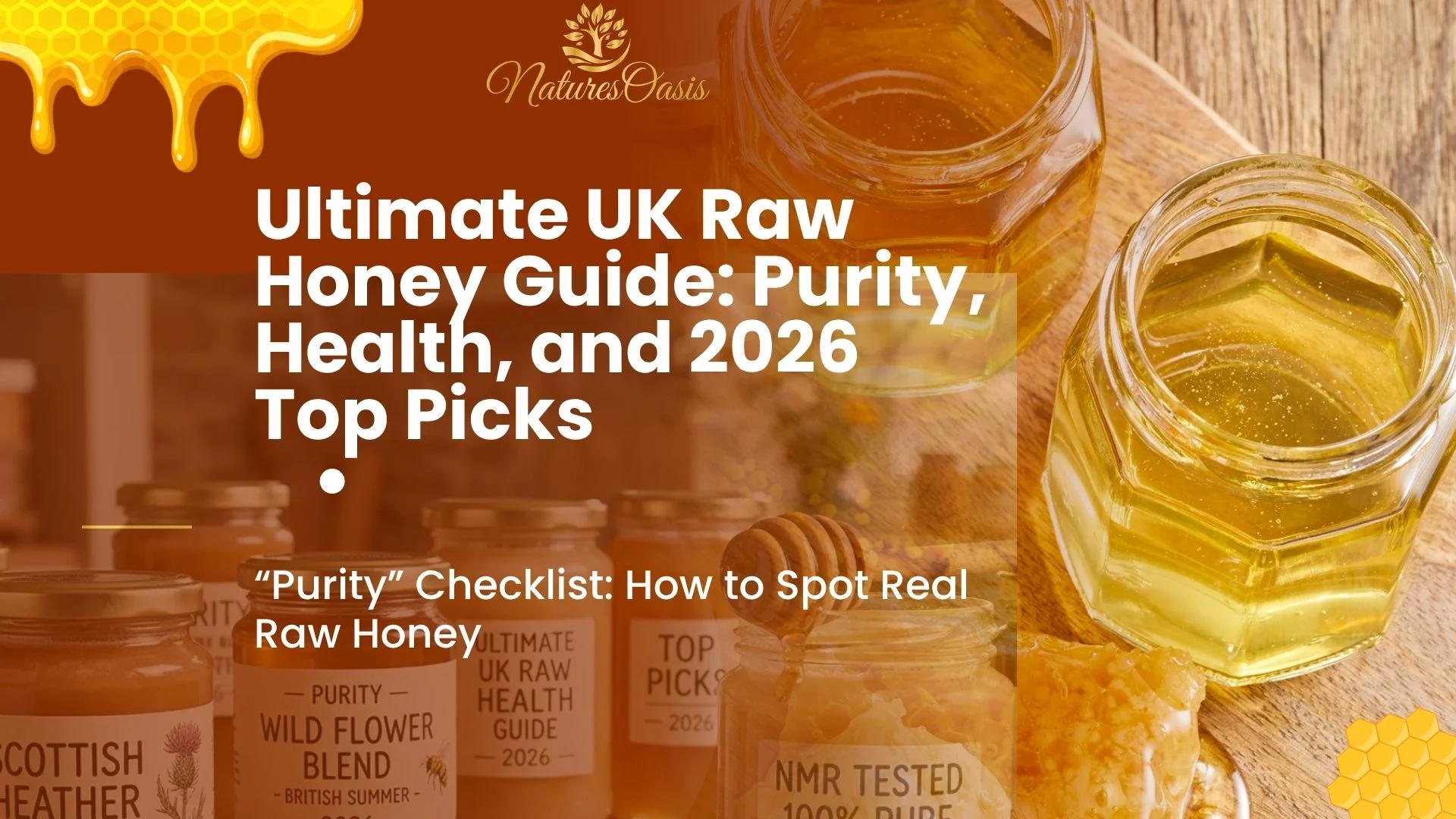
The UK honey market is booming, but as demand for “natural” products grows, so does the risk of “honey fraud.” With the global raw honey market projected to reach $15.3 billion by 2033, consumers are increasingly wary of the clear, liquid syrups in supermarket “bear” jars. If you want more than just sweetness, you need to know what’s actually inside your jar.
1. 4 DIY Tests: How to Spot “Fake” Honey at Home
Many commercial honeys are diluted with rice syrup or high-fructose corn syrup. Use these simple tests to verify your purchase:
- Vinegar Test: Mix honey with water and add a few drops of vinegar. If the mixture foams or bubbles, it may contain chalk or other alkaline additives.
- Water Test: Drop a spoonful into a glass of room-temperature water. Pure raw honey will sink and form a solid lump at the bottom. Fake honey will start dissolving and clouding the water immediately.
- Thumb Test: Place a small drop on your thumb. Raw honey is dense and will stay in place. Adulterated honey will run or spread across your skin quickly.
- Blot Test: Put a drop on a paper towel. Pure honey will sit on top without soaking in. If a wet ring forms around the drop, it likely contains added water or syrups.
2. The Scientific Edge: Why “Raw” is a Superfood
Raw honey is not just a sweetener; it’s a living product.
- Enzymes & Propolis: Raw honey contains over 5,000 enzymes. It also includes propolis, a bee-made “glue” with powerful anti-inflammatory and neuroprotective effects.
- Allergy Relief: Eating local raw honey introduces trace amounts of local pollen to your system, which may help build immunity against seasonal allergies through a process similar to immunotherapy.
- Blood Sugar Management: Raw honey has a lower Glycemic Index (GI) than table sugar, causing a slower rise in blood glucose, making it a slightly better option for those monitoring their sugar levels.
3. Decoding the Label (Avoid These Red Flags)
- “Blend of EU and non-EU honeys”: This is often a sign of mass-processed, highly filtered honey that hides its origin to lower costs.
- Perfect Clarity: If honey has been in your cupboard for months and is still crystal clear, it has likely been ultra-filtered to remove the healthy pollen that usually triggers natural crystallization.
- The Price Trap: Producing pure British honey is labor-intensive. If a large jar is “unbelievably cheap,” it’s probably a processed syrup.
UK Raw Honey Picks for 2026
- Scottish Bee Company (Heather Honey): Often cited as the UK’s healthiest honey, it is a British “superfood” comparable to Manuka for its high antibacterial activity.
- Black Bee Honey (British Summer): A top-rated choice for those seeking a complex, fruity, and truly British floral profile.
- Odysea (Greek Pine & Fir): A “raw” labelled, award-winning honey known for its thick texture and malty, savoury notes.
- Bermondsey Street Bees: An artisanal producer specializing in raw, sustainably produced urban honey from London and Essex.
- Raw Honey Shop: Offers premium, NMR-tested (Nuclear Magnetic Resonance) organic forest and wildflower honeys to ensure 100% purity.
- Manuka Doctor (Monofloral Manuka): A consistent Great Taste Award winner, independently tested for MGO/UMF antibacterial ratings.
“Purity” Checklist: How to Spot Real Raw Honey
New UK and EU regulations in 2026 (Directive 2024/1438) mandate clearer labeling of origin and advanced testing to combat “fake” honey.
| Feature | Raw Honey (Authentic) | Processed Honey (Commercial) |
|---|---|---|
| Appearance | Cloudy or opaque due to pollen and enzymes. | Clear, smooth, and highly transparent. |
| Crystallization | Will naturally crystallize (become solid/gritty) over time. | Stays liquid almost indefinitely due to pasteurisation. |
| Labels | Look for “Raw,” “Unfiltered,” or “Cold-pressed”. | Labels like “Pure” or “Blend of EU/Non-EU” often signal processing. |
| Testing | Often independently tested (NMR or Lab tested) for sugar syrups. | Frequently contain hidden rice or corn syrups. |
Conclusion
Crystallization is your friend! If your honey turns grainy, it’s proof that it’s real, raw, and full of pollen. In 2026, the trend is moving away from processed “liquid gold” toward the cloudy, thick, and authentic jars produced by local British beekeepers.